

🎧
Listen to this article
The federal government has identified 21 states alongside the Federal Capital Territory (FCT) as areas facing either high or moderate risks of Ebola importation due to fresh outbreaks in parts of Africa.
This disclosure was made on Thursday by the Nigeria Centre for Disease Control and Prevention (NCDC), which has placed states on a heightened alert for Ebola preparedness to guard against cross-border transmission.
NCDC Director-General, Jide Idris, explained that while Nigeria has not recorded any confirmed case tied to the current outbreak in East and Central Africa, the acceleration of regional transmission has drastically increased the risk of the virus entering the country.
The NCDC classified Lagos, the FCT, Rivers, Kano, Enugu, Borno, Akwa Ibom, Cross River, Taraba, and Adamawa as high-risk areas because they house international airports, porous land borders, or heavy travel and commercial corridors.
Meanwhile, Ogun, Nasarawa, Kaduna, Plateau, Kogi, Niger, Jigawa, Katsina, Bauchi, Ebonyi, Abia, and Bayelsa were mapped as moderate-risk states that must maintain active surveillance and readiness.
According to Idris, this categorization is the result of a fresh dynamic risk assessment launched by the NCDC following escalating Ebola infections in the Democratic Republic of Congo (DRC) and Uganda.
He pointed out that the World Health Organisation’s classification of the situation as a Public Health Emergency of International Concern means Nigeria must immediately bolster its defensive measures.
He stated:“The risk of Ebola importation into Nigeria is high because of international travel, regional population movement, porous borders, and extensive trade networks.”
The agency also raised concerns that early Ebola symptoms mirror those of malaria and Lassa fever, which could cause dangerous delays in detection and accelerate spreading.
Data from health agencies in the DRC and Uganda show 1,077 suspected cases and 247 deaths so far, with the majority of infections impacting individuals between the ages of 14 and 45.
The NCDC highlighted that the ongoing outbreak is driven by the Bundibugyo strain of the virus, a variant that currently lacks approved vaccines or specific treatments.
Idris noted that this reality makes quick diagnosis and response vital.
He said:“The risk of Ebola importation into Nigeria is high because of international travel, regional population movement, porous borders, and extensive trade networks,” he said. [Note: The original text duplicates this exact point regarding the necessity of rapid detection, isolation, contact tracing, infection prevention and supportive care to contain infections.]
He re-emphasized that the virus cannot be transmitted through the air, spreading instead via direct contact with infected blood, body fluids, contaminated surfaces, or infected animals.
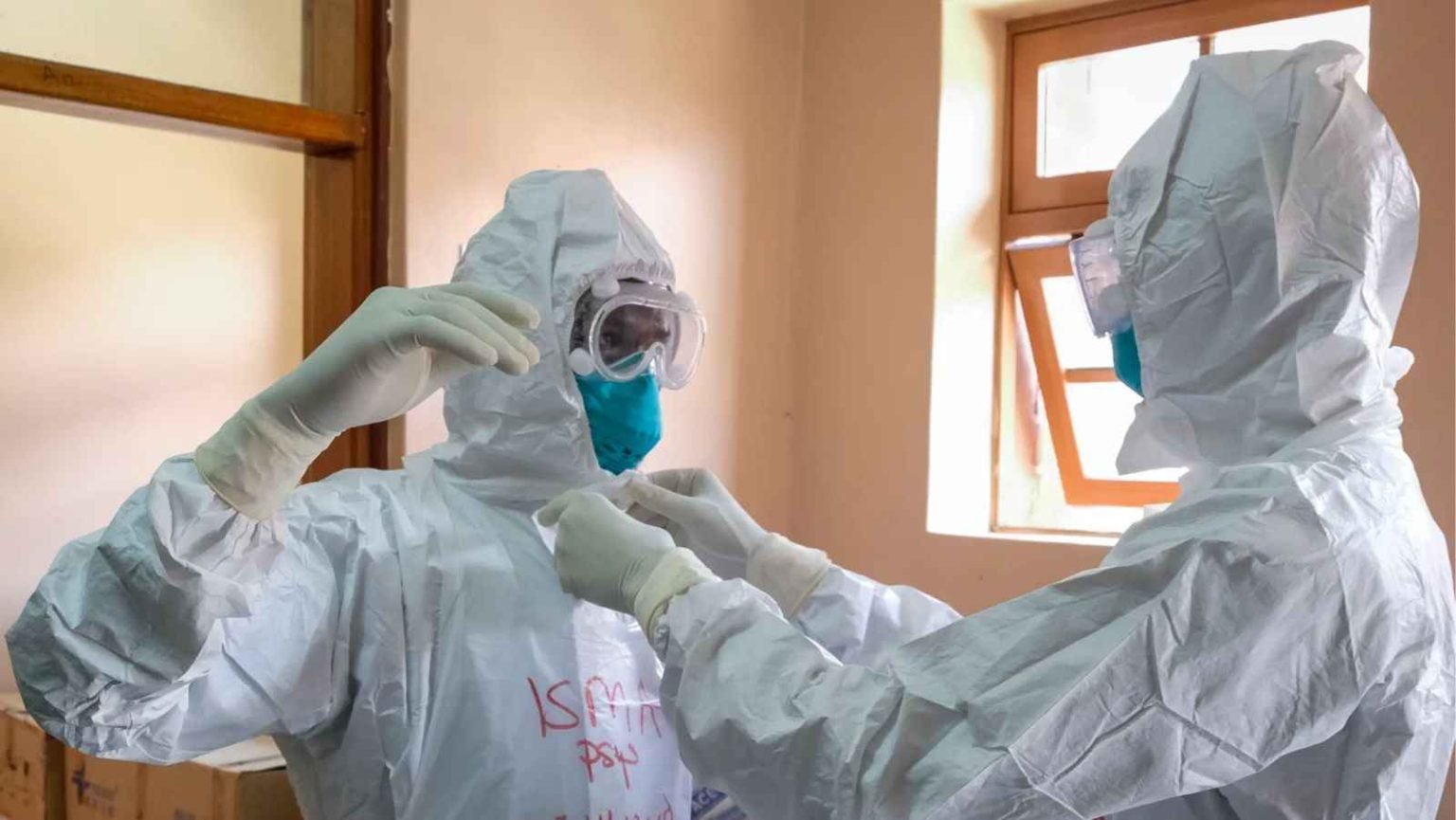
Consequently, the NCDC has instructed state governments to activate emergency response frameworks, tighten monitoring at border points and airports, set up isolation units, and secure protective gear for frontline health workers.
States are required to submit their official readiness reports within 72 hours and immediately flag any suspected cases, strange fever clusters, or high-risk exposures.
Nigeria famously stopped an Ebola outbreak in 2014 after an infected Liberian-American traveler flew into Lagos, a crisis that became one of the nation’s most historic public health responses.










No Comments