


🎧
Listen to this article
US President Donald Trump stated that an agreement to reopen the Strait of Hormuz could arrive as early as Wednesday, though he cautioned that Iran would face severe military consequences if the talks collapsed.
Movement through this critical oil and gas corridor has remained a major obstacle in negotiations and triggered fresh clashes following an April ceasefire.
Tehran has increased its control over the waterway, seeking to manage transit and levy tolls—authority it did not hold prior to the conflict that began on February 28.

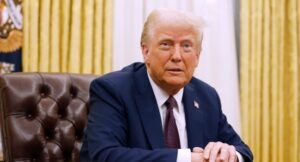
Trump noted on Tuesday that an accord with Iran could materialize tomorrow or the next day, informing reporters in California that negotiators had a very good day.
Earlier statements carried a much sharper warning. “The strait is going to be open very soon, or they’re going to get hit very hard — and then the strait’s going to be open,” Trump remarked during an interview with Fox News, adding, “All you can do is fight your way out.”
US Treasury Secretary Scott Bessent also indicated to CNBC that there is a chance we may have a deal by Wednesday or Thursday.
Highlighting ongoing risks in the region, a crew member was reported missing on Tuesday after a merchant vessel was struck by a projectile in the strait, while an Indian vessel sank in the Red Sea following an unattributed strike.
Echoing a familiar cycle, Trump threatened last week to strike Iran “very hard,” potentially targeting civilian infrastructure, before softening his stance and suggesting an agreement was close.
While Tehran’s foreign ministry has denied holding direct talks with Washington, Trump maintained that discussions are active.
US Secretary of State Marco Rubio confirmed on Tuesday that the United States is participating in negotiations involving Oman and Iran to boost traffic through the route.
According to Axios, the US, Iran, and Oman are approaching a 60-day interim agreement for safe passage, which Washington hoped to unveil on Wednesday.
Qatar, acting as a mediator, reported that diplomatic initiatives are active even though no direct bilateral talks are scheduled, with Emir Sheikh Tamim bin Hamad Al-Thani discussing regional de-escalation with Trump by phone.
Washington’s broader objectives involve reopening the strait alongside the denuclearisation of Iran, a process Trump acknowledged could take a little while.
Previously labeling Tehran duplicitous for denying negotiations, Trump asserted that a US counter-blockade against Iranian ports would persist “unless a Deal, or Total Surrender, is accomplished.”
More than five months into a costly conflict, Iran continues launching missiles and drones against US, allied, and commercial targets.
Early Tuesday, the United Kingdom Maritime Trade Operations (UKMTO) agency reported that an unidentified cargo ship was hit by an unknown projectile near the Omani coast in the Strait of Hormuz.
Tehran continues enforcing a de facto blockade, requiring ships to coordinate passages.
These disruptions have amplified the significance of Red Sea shipping routes, where Yemen’s Houthi rebels have declared a blockade against Saudi Arabia.
The Saudi port of Yanbu has allowed trade to bypass the strait, though Houthi attacks continue to target shipping in the area.
On Tuesday, the Indian ship MSV Faize Noore Oliya sank off the coast of Yemen after an unattributed attack, though the entire crew was rescued.







No Comments