

🎧
Listen to this article
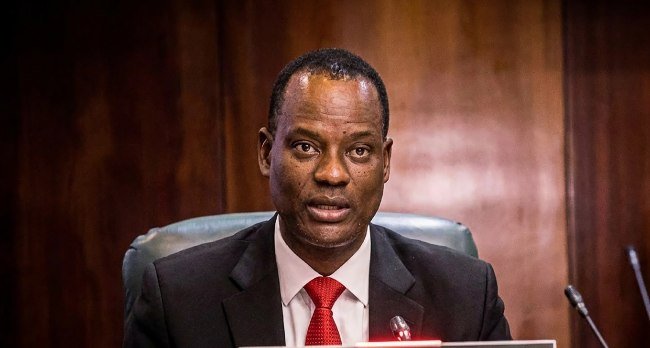
The Federal Government has clarified that it will only introduce a tax on petroleum products once the national economy stabilizes and citizens’ purchasing power improves sufficiently to absorb it, according to the Minister of Finance and Coordinating Minister of the Economy, Taiwo Oyedele.
Oyedele made the disclosures during an interview with Arise TV business correspondent Rotus Odiri on the sidelines of the 2026 International Monetary Fund (IMF) and World Bank annual meetings in Bangkok, Thailand.
Addressing inquiries regarding potential fuel tax policies, the Finance Minister noted that taxes constitute between 20 and 80 percent of petrol pump prices in several international jurisdictions, with numerous African nations levying six to 10 distinct taxes on refined fuel products.

He explained that imposing a fuel levy while petrol was previously subsidized would have been counterproductive, as the government would effectively be taxing its own subsidies.
He added that introducing additional taxes immediately following subsidy removal would have placed excessive financial strain on Nigerian households.
At the appropriate time, when the economy has stabilised, and income level will be able to accommodate it, those taxes will come,
Oyedele stated, emphasizing that statutory levies are not designed for arbitrary revenue generation.
The minister outlined that future revenues accrued from the planned fuel tax will be strictly designated for funding road infrastructure development and establishing a national strategic fuel reserve to cushion domestic retail prices against global supply shocks.
He noted that maintaining a strategic reserve would also provide the Federal Government with legal flexibility to temporarily suspend fuel taxes whenever international crude prices spike.
Dispelling concerns regarding behind-the-scenes policy implementation, Oyedele emphasized that existing statutory frameworks prohibit any fuel tax from taking effect without an official gazette order signed by the Finance Minister.
He reassured the public that the government has no intention of introducing measures in secret and will clearly communicate the policy’s rationale and socio-economic benefits prior to implementation.
Revisiting the sequence of macroeconomic adjustments, Oyedele detailed the timeline surrounding petrol subsidy removal and foreign exchange unification.
He disclosed that the government initially removed the direct subsidy on petrol before permitting the exchange rate to adjust gradually, identifying currency valuation as a primary determinant of pump prices.
Oyedele revealed that when foreign exchange rates fluctuated toward higher thresholds, the government intervened by quietly capping foreign exchange rates to cushion the immediate economic impact on citizens, which accounted for lingering subsidy dynamics during part of 2023.
The minister concluded by affirming that the petroleum subsidy regime was fully terminated by October 2023, when dual support mechanisms on both retail fuel pricing and official foreign exchange allocations were officially ended.





No Comments