

🎧
Listen to this article
The Nigeria Centre for Disease Control and Prevention (NCDC) has indicated that the 2027 general elections could face potential rescheduling if the recent Ebola outbreak expands to a magnitude that jeopardizes public health safety across the country.
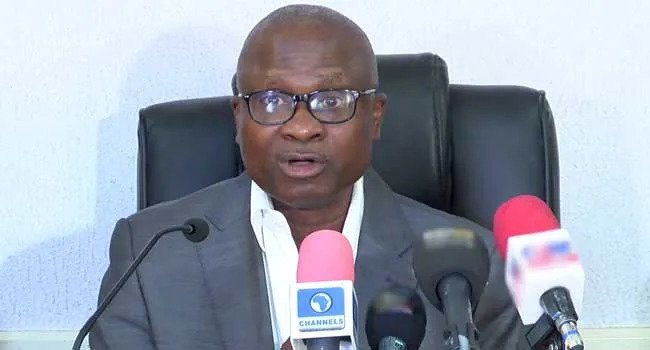
Speaking as a guest on Channels Television’s Politics Today, the Director-General of the NCDC, Dr. Jide Idris, explained that any future decision regarding the electoral calendar would be dictated by the geographical spread and severity of the virus.
However, Dr. Idris clarified that current epidemiological data does not warrant altering the election schedule, expressing confidence that public health interventions will successfully contain the virus before major campaign events escalate.


We hope the election will not be postponed, but if the thing gets wide enough, that might be considered. As of now, there is no need for that,
Dr. Idris stated.
With political activities accelerating ahead of the voting timeline scheduled to begin in January, concerns have mounted over mass public gatherings, rallies, and prospective voter aggregation points facilitating viral transmission.
The NCDC boss emphasized that any public health recommendation to adjust election dates would remain strictly rooted in medical necessity rather than political expediency.
Dismissing speculation that the federal government or health authorities could leverage the health emergency for political leverage, Dr. Idris assured citizens of the agency’s strict neutrality.
We in the health sector will not use disease issues as a political weapon. No government will use Ebola as a political weapon,
he noted.
Tracing the origin of the public health threat, Dr. Idris revealed that Nigerian disease control experts had been monitoring the outbreak since its initial emergence in the Democratic Republic of the Congo (DRC) months earlier, evaluating potential transmission risks through international air travel and border ports of entry.
This Ebola thing started in DRC a couple of months ago and we were tracking. They said for you to track again there is a possibility that it may get here due to our population movement, flight into this country, and ports of entry, yet it came,
Dr. Idris explained, reiterating that surveillance systems remain fully activated to contain further primary contact spread.








No Comments