

🎧
Listen to this article
The Independent National Electoral Commission (INEC) has blamed some of its field registration officers for introducing artificial intelligence-generated photographs and questionable records into the preliminary Register of Voters ahead of the 2027 general election.
The commission stated that certain registration personnel nationwide allegedly compromised its voter registration database by using their official system credentials to upload irregular entries.
INEC’s Director of Information and Communication Technology, Dr. Lawrence Bayode, made the disclosure on Friday during an interview on Arise Television, explaining that the irregularities were uncovered via the commission’s Automated Biometric Identification System (ABIS).

According to him, the biometric identification system enabled the commission to trace the suspicious files and determine how the disputed entries entered the database.
Bayode clarified that while artificial intelligence generated a portion of the flagged images, other defective entries stemmed from substandard field registration practices.
“We have registration officers on the field. And these registration officers, they have login details to log into the system. So what we have found is that some of these registration officers, not all of them now, some of them across the states nationwide, they’ve done different things to bring these irregularities onto the register,” Bayode said.
He noted that although the ICT department mapped the exact origin of the unauthorized records, the underlying motives of the implicated officers remain under review.
“Some of these pictures are AI-generated. Some of them not AI-generated, but very bad registration. And this thing got into the register by the registration officers and because they have access to register people,” he stated.
“When the ABIS was run on the system, we saw these people. We know what they did. We know how they did it. But honestly, I don’t know why,” Bayode added.
The revelation comes amid widespread public reaction following the discovery of abnormal photographs in the preliminary voter list published on INEC’s online portal on October 26.
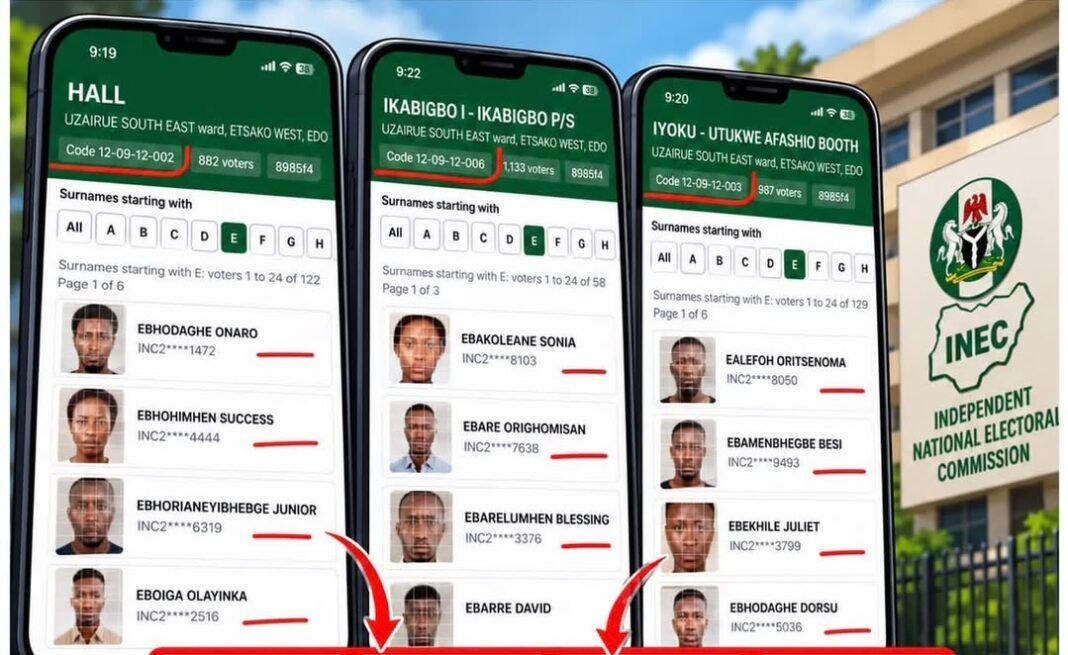
The issue gained public attention after social media users circulated screenshots depicting AI-styled voter records originating from voting centers in Edo State.
A social media user, identified as Decosule, flagged suspicious facial records linked to Ward 11 in Etsako West Local Government Area and Udomi in Esan Central Local Government Area, questioning the authenticity of the records and whether associated Permanent Voter Cards (PVCs) had been printed or collected.
The viral posts sparked broader debates among political parties and civic organizations, with stakeholders pressing the electoral body for answers regarding its database security firewalls.
Similarly, the Nigeria Democratic Congress (NDC) called on INEC to provide a comprehensive explanation regarding the origin of the AI-linked photographs and verify whether the affected entries represented genuine registered voters.
Civic groups also cited instances of duplicate entries and cases where voters reported their personal details were missing from the online database.
Addressing the public backlash on October 27, INEC confirmed that its internal checks had flagged several irregular records during the physical display of the preliminary register held across Registration Areas between October 9 and 15.
In an official statement signed by the Chairman of its Information and Voter Education Committee, Mohammed Kudu Haruna, the commission confirmed that a comprehensive review and data-cleanup exercise were actively underway.
INEC clarified that the document uploaded to its portal on October 26 mirrored the physical display version and did not reflect real-time administrative deletions occurring during the ongoing cleanup.
The commission added that it is investigating the circumstances surrounding the suspicious uploads to identify procedural or technical gaps and impose sanctions on defaulting personnel.
INEC reiterated that the online release remains a preliminary document subject to corrections through statutory Display, Claims, and Objections procedures, which allow citizens to report inaccuracies prior to final certification.
The commission is scheduled to conclude all adjudication, verification, and database auditing procedures before certifying the final Register of Voters on December 15, 2026.








No Comments