

🎧
Listen to this article
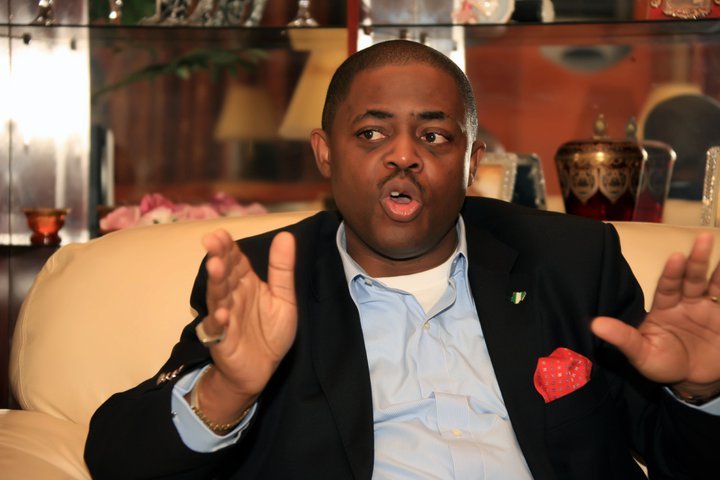
Nigeria’s High Commissioner to South Africa, Lesotho, and Eswatini, Ambassador Olufemi Fani-Kayode, has recounted how former President Olusegun Obasanjo prevented the late Libyan leader, Muammar Gaddafi, and his entourage from bringing high-calibre weapons into Abuja in 2006—a move he credited with saving lives.
Fani-Kayode, a former Minister of Aviation, shared the story in a Facebook post titled 20 Years Ago With Muammar Ghaddafi!, recalling when Gaddafi visited Nigeria for the African and South American Heads of State Summit.
He noted that he welcomed the Libyan strongman at the airport on Obasanjo’s behalf and was assigned to accompany him throughout his four-day stay.



He arrived at the airport with no less than approximately 200 bodyguards, all with sidearms, and at least 100 cars (which had been sent ahead and were parked at the airport) to convey him to Abuja. The boot of each of those cars was filled with AK-47s and all manner of sophisticated weapons, Fani-Kayode wrote.
According to him, Nigerian security operatives and military personnel halted the convoy at the airport gate. While Gaddafi, his delegates, and his security detail were permitted entry with their sidearms, authorities barred them from taking the heavy firearms stored in the vehicle boots into the city.
Following three additional unsuccessful attempts to exit the airport with the arms, Gaddafi grew furious.
Ghaddafi totally lost his temper, got out of his car and started walking under the burning sun, past the airport gate and towards Abuja saying that if the cars were not allowed in he would walk there instead. Every single one of his 200 bodyguards and delegation members walked behind him! he recounted.
Fani-Kayode explained that he quickly reached out to Obasanjo, who was already heading to the airport for a trip to Lagos, and informed Gaddafi that the Nigerian President was coming to resolve the standoff personally, prompting the Libyan leader to turn back.
Upon arrival, Obasanjo warmly embraced Gaddafi, apologised for the delay, and assured him that the gates would be opened. However, as he departed, the former President quietly issued a firm directive to Fani-Kayode.
As he walked past me he bent over and whispered into my ear that under no circumstances would Ghaddafi and his team be allowed in unless they complied with our request that they drop the AK 47’s from the boots of their cars and put them back on their plane, he revealed.
Fani-Kayode disclosed that Gaddafi’s Minister of National Security and Head of Protocol initially threatened to fly the Libyan leader back home and boycott the summit entirely if the arms were not permitted. Eventually, the Libyan officials backed down following what he termed a hot encounter and harsh trading of words.
The firearms were subsequently offloaded and returned to Gaddafi’s aircraft, which Nigerian soldiers immediately cordoned off to prevent the weapons from being moved later.
He added that the real reason behind Obasanjo’s unyielding stance only became apparent during the following Federal Executive Council meeting.
As for my boss OBJ, he saved lives on that day by putting his foot down and insisting that the heavy weapons must not be let in because, as I was later told when the matter was discussed at the next cabinet meeting, what the Libyans had done in the past when they carried in such weapons was to hand them over to their local associates and leave them behind.
Those lethal weapons would later become part of a stockpile of arms that provided a massive arsenal for terrorists, insurgents and other ruthless non-state actors within our country, he stated.
Reflecting on the episode, Fani-Kayode noted that the standoff proved that firmness, the display of mutual respect and a strict adherence to the rules of engagement were vital, pointing out that the Libyan delegation treated Nigeria with massive respect afterward.
He also remembered Gaddafi’s eventual death in his hometown of Sirte on October 20, 2011, admitting he felt sorrow watching footage of the incident.
This was a clear and graphic example and confirmation of the ephemeral and transient nature of power and the futility of the vanity that goes with it.
What hit me even more was the fact that the Head of Protocol who spoke so loudly and aggressively on the day of our encounter and who said that if we did not allow the arms to be taken in they would fly Ghaddafi back home was one of those condemning him on CNN all the way from Paris on the day he was murdered, Fani-Kayode concluded.








No Comments