

President Bola Tinubu had transmitted the bills to the National Assembly for consideration on October 3, sparking controversy, particularly among Northern governors and other stakeholders who voiced opposition to the reforms.
In response, the Presidency clarified that the bills were not intended to target any specific region but were part of a broader effort to promote national development.
Read Also: APGA Chairman Makes Fresh Revelation On Bianca Ojukwu’s Ministerial Appointment
The Senate’s second reading included a Bill to Establish the Joint Revenue Board, the Tax Appeal Tribunal, and the Office of the Tax Ombud, all key components of Tinubu’s comprehensive tax reform agenda.
The legislation aims to streamline and coordinate revenue administration, as well as address disputes within Nigeria’s tax system.
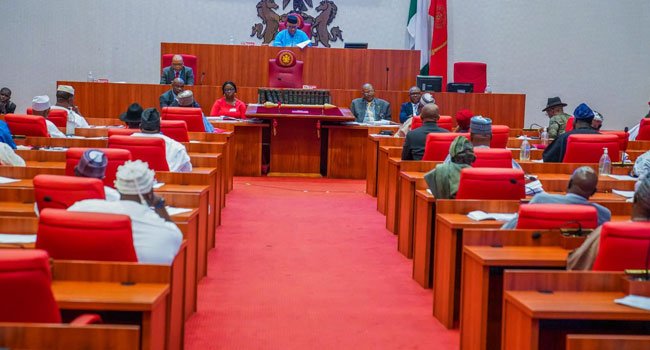
During the session, lawmakers discussed the general principles of the reform bills. Prior to the open debate, the Senate held a closed-door meeting to review the four bills, which were initially transmitted by President Tinubu on September 3, 2024, in line with recommendations from the Tax Reforms Committee chaired by Taiwo Oyedele.
While the reforms were largely recognized as crucial for modernizing Nigeria’s tax system and alleviating the tax burden on citizens, Senator Ali Ndume raised concerns about the timing and certain provisions.
He suggested that, with amendments, the bills could be passed “in less than 24 hours” if withdrawn and reintroduced.
However, the Chief Whip strongly disagreed, advocating for the bills to proceed to the public hearing stage as part of the legislative process.



 https://whatsapp.com/channel/0029VaihFajBadmT29ufud2Z









No Comments