

🎧
Listen to this article
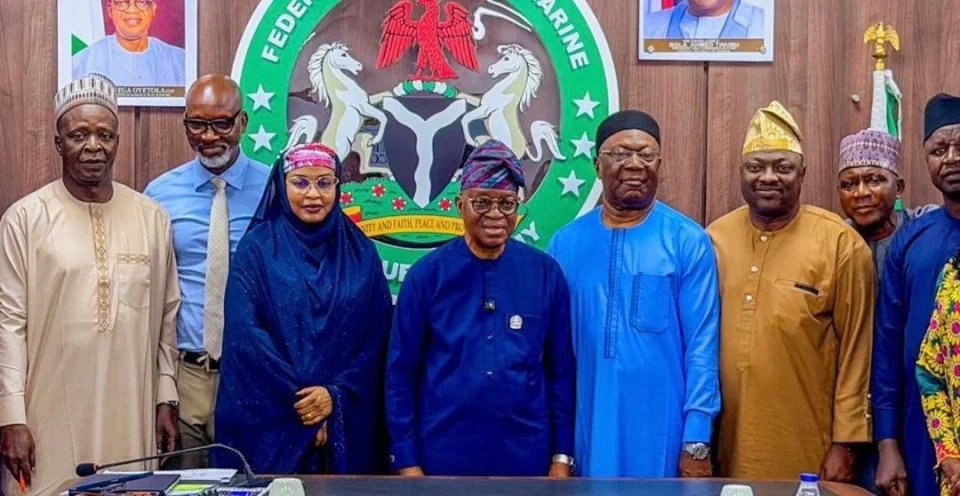
The Federal Government has launched a specialized technical committee tasked with closing Nigeria’s domestic fish production gap, lowering reliance on foreign imports, and boosting the overall aquaculture value chain.
Adegboyega Oyetola, who serves as the Minister of Marine and Blue Economy, formally inducted the 17-member Technical Committee on Accelerating Fish Production in Nigeria during a Thursday gathering in Abuja, urging participants to convert prior strategic roundtable proposals into concrete, actionable steps.
The minister explained that the panel was formed to shift away from mere policy suggestions and instead craft a structured execution blueprint capable of resolving barriers hindering local fish supply. “Fish is an important source of animal protein for millions of Nigerians.


The fisheries and aquaculture sector sustains livelihoods across production, processing, marketing, transportation and related services.
However, domestic production remains substantially below national demand, with consequences for food security, household incomes and foreign-exchange resources,” he remarked.
Oyetola pointed to multiple industry hurdles, including exorbitant feed costs, limited availability of premium fish seeds and broodstock, vulnerable biosecurity measures, high post-harvest wastage, and sparse cold-chain storage facilities.
Additional constraints highlighted included scarce affordable financing, innovation gaps, weak data collection frameworks, and deficient standards, traceability, and market growth.
He noted that moving fisheries oversight to the Ministry of Marine and Blue Economy provides a solid structural platform to tackle these issues under wider blue-economy initiatives.
Recalling an October 29, 2025 strategic roundtable hosted alongside the National Institute for Policy and Strategic Studies, Oyetola stressed that the new team must analyze those previous proposals and formulate a targeted implementation matrix.
“Your assignment is not to develop another policy or establish a parallel programme,” he instructed, emphasizing alignment with existing laws, national policies, and institutional scopes.
The panel is directed to map out ongoing initiatives across public and private sectors to prevent resource duplication and establish a clear execution timeline, funding pathways, and performance targets within an eight-week window.
Permanent Secretary Fatima Mahmood, who chairs the committee, assured that the team will collaborate closely with researchers, government bodies, and industry stakeholders to deliver practical interventions.
The complete appointed membership features Fatima Mahmood, Omoragbon Wellington, Garba Usman, Prof Ayo Omotayo, Prof Sule Abiodun, Akintola Latunji, Prof Sadiku Suleiman Omeiza, Dr Faith Izibenua Zibs-Godwin, Dr Charles Okaga, Dr Ebinimi Ansa, Onoja Sunday, Mashi Gabriel Sani, Remi Ahmed, and Dr Charles Iyangbe.
Previous government assessments revealed a deficit exceeding 2.2 million metric tonnes between annual domestic output and national demand, with local supply covering merely 38.9 percent of requirements.








No Comments