

🎧
Listen to this article
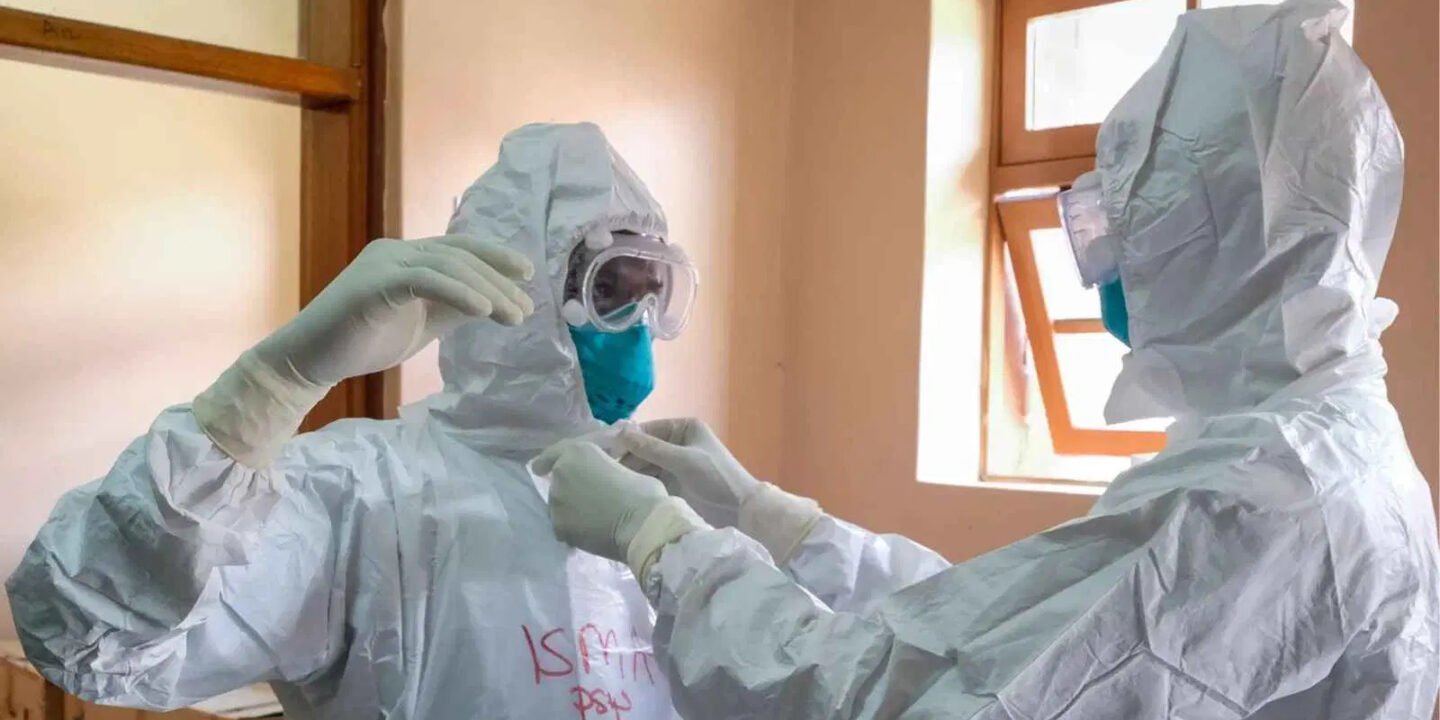
The Federal Government has reported a laboratory-confirmed case of Ebola virus disease within the Federal Capital Territory (FCT), Abuja, while launching contact tracing for 44 individuals who had direct exposure to the patient.
Announcing the public health emergency in an official release on Tuesday, October 20, 2026, the Minister of Health and Social Welfare, Prof. Muhammad Ali Pate, confirmed that containment protocols were immediately activated upon diagnosis.
A woman who recently arrived in Nigeria on an international flight from Uganda, was admitted to a private hospital in the FCT, where she received treatment for several days before the diagnosis was confirmed,
the health minister stated.



The patient has been placed in an isolation facility where medical personnel are administering specialized clinical care.
To prevent potential community transmission, the Federal Ministry of Health and Social Welfare, working alongside the Nigeria Centre for Disease Control and Prevention (NCDC) and the FCT Health Services Secretariat, has deployed field epidemiologists across the territory.
Surveillance officers have commenced monitoring the 44 identified close contacts, expanding their scope to track healthcare practitioners, fellow patients, caregivers, and international flight passengers who may have interacted with the traveler.
Additionally, public health authorities have dispatched IPC specialists to disinfect the private hospital where the patient spent several days and fortify its infection control standards.
The government has alerted medical workers across public and private hospitals throughout Nigeria to elevate their index of suspicion, enforce mandatory isolation for suspected cases, observe strict safety precautions, and transmit immediate alerts to health agencies.
Prof. Pate reassured the public, advising citizens to avoid panic while prioritizing personal hygiene, including frequent handwashing and refraining from handling bodily fluids of individuals exhibiting unexplained illness.
He highlighted that key symptoms include sudden onset of high fever, acute body weakness, severe headaches, vomiting, and diarrhea, particularly among persons with recent international travel history.
Anyone who develops symptoms should avoid close contact with others and call public health authorities for guidance before visiting a healthcare facility,
the statement advised.
The ministry also appealed to individuals contacted during field operations, especially passengers on the patient’s incoming flight, to provide accurate travel details and comply with official health monitoring protocols.
The development comes on the heels of an October 6 warning from the NCDC regarding potential cross-border transmission risks following an Ebola case in Kenya linked to an outbreak in the Democratic Republic of the Congo.
According to the World Health Organization (WHO), Ebola spreads via direct contact with the blood or bodily fluids of infected persons or contaminated materials, noting that patients become contagious only after symptoms manifest following an incubation period of two to 21 days.
Drawing on lessons from the successful containment of the 2014 Ebola outbreak, Prof. Pate expressed confidence in Nigeria’s epidemiological response capabilities while emphasizing that citizen cooperation remains crucial to stopping further spread.
The Federal Government stated that joint monitoring between the Presidential Task Force on Ebola Virus Disease and the NCDC remains ongoing, advising the public to report suspected cases via the NCDC’s 24-hour toll-free line at 6232.








No Comments