

🎧
Listen to this article
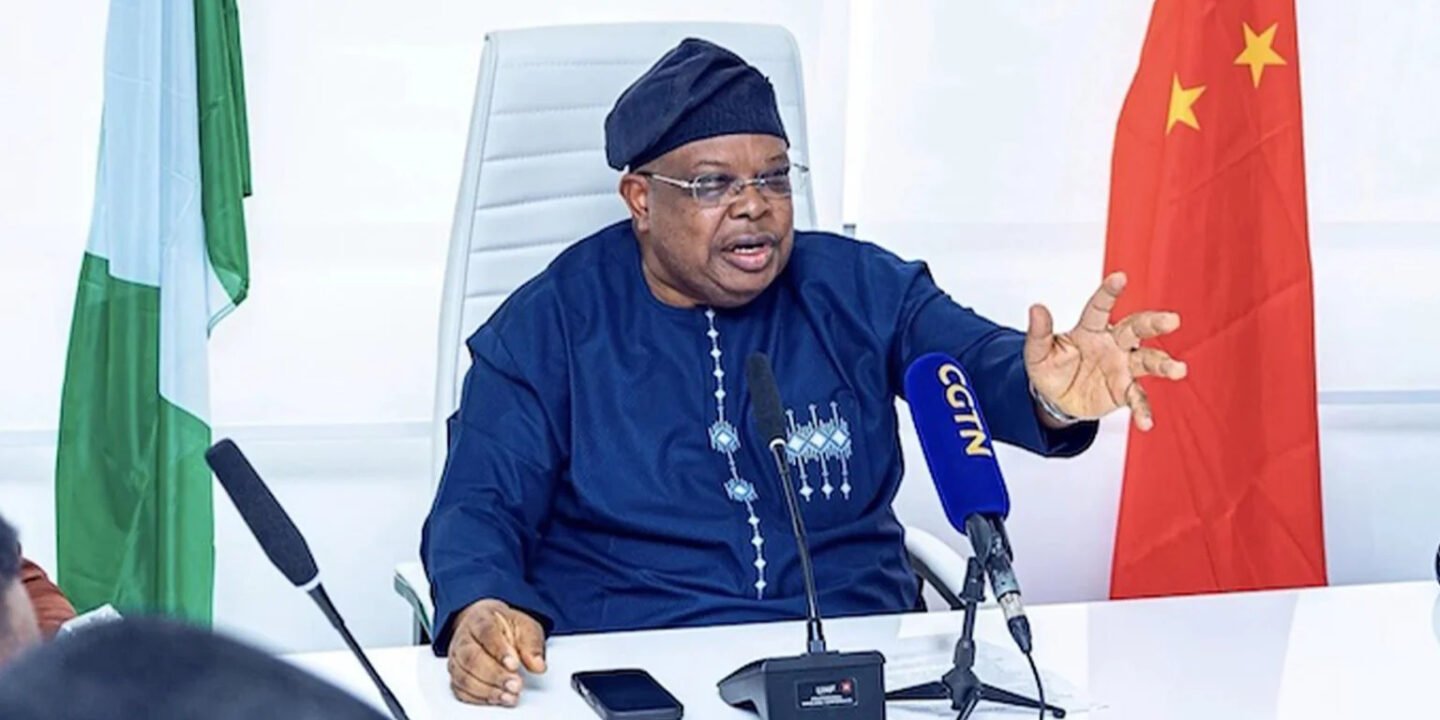
The Minister of Power, Joseph Tegbe, has stated that Nigerians may have to wait another three to five years to witness major improvements in electricity supply, attributing the sector’s lingering crisis to decades of decaying infrastructure, poor investment choices, and funding constraints.
Tegbe disclosed this on Monday while appearing on Arise Television’s The Morning Show.
While acknowledging the daily hardship caused by erratic power supply, the minister noted that the electricity industry has accumulated deep-seated challenges over several decades that cannot be fixed overnight.
Read Also:
 Katsina Government Suspends Emir Of Daura Over Sexual Harassment Allegations From Foreign Tourist
 Latest Remote Job Vacancies In Nigeria – Monday, November 23, 2026
 Jimmy Odukoya Reacts To Court Injunction Ordering Him To Stop Presenting Himself As Senior Pastor And Spiritual Head Of Fountain Of Life Church
According to him, the federal government discovered that the gaps across the power value chain are far deeper than previously estimated, affecting generation, transmission, and distribution simultaneously.
He maintained that although the current administration is working steadily to stabilise the grid, citizens should expect more noticeable results within the next three to five years.
The truth is that some of the reasons why we haven’t reached where we are is, at the end of the day, some of us who are in the sector have realised that the deficiencies in infrastructure are much more than what we estimated. That’s the truth, and I’m telling you today, we are on course, by God’s grace. In the next three to five years, we’ll see much improvement, he said.
If it’s going to take five years, I will tell you it’s going to take five years, the minister added, stressing his commitment to honesty and accountability in steering the ministry.
However, Tegbe ruled out any planned hike in electricity tariffs, noting that the government’s top priority is delivering reliable power rather than adding financial strain on households and businesses.
He stated that President Bola Tinubu has mandated the ministry to explore all viable options to boost power access, including reviewing existing policies, commercial frameworks, and financing models.
There’s no plan to increase tariffs. I even have, to be honest with you, the most important thing for me is how do I get electricity to Nigerians? he said.
Breaking down the root causes of the power crisis, Tegbe recalled telling lawmakers during his Senate screening that technical faults account for only 20 per cent of the problem, while human and institutional bottlenecks make up the remaining 80 per cent.
He noted that his time in office has validated that view, pointing to weak inter-agency coordination, flawed commercial structures, liquidity shortfalls, and governance lapses as key hindrances.
To illustrate the depth of neglect in the sector, the minister revealed that some power infrastructure across the country still carries the emblem of the defunct Electricity Corporation of Nigeria (ECN).
Some of these towers still bear the ECN logo. Those things have not been replaced, he said.
Tegbe also faulted past administrations for executing projects without building the supporting infrastructure needed to make them operational.
He pointed to the practice of installing transformers in communities where no transmission lines exist as a prime example of misplaced priorities.
Everybody wants a transformer in their village. Even where transformers are being installed, there are no transmission lines getting there, he said.
The minister noted that his ministry is currently auditing ongoing projects to identify critical interventions and ensure public funds go into investments that directly boost supply.
He stressed that infrastructure decisions must be driven by economic viability rather than political expediency.
Tegbe also flagged legacy debts owed to power generation companies (GenCos)—especially for gas supplied to thermal plants—as a major drag on the industry.
He revealed that federal government liabilities, originally estimated at ₦6 trillion, were renegotiated down to ₦3.3 trillion, out of which ₦1.23 trillion has already been disbursed.
According to him, the government plans to clear the remaining balance by 2027.
Tegbe added that authorities are considering offsetting part of the debt against royalties and corporate income taxes owed by the firms, while also engaging stakeholders to bring down the cost of gas supplied to power plants.
Justifying the debt renegotiation, he explained that the government must balance power sector obligations with urgent funding needs in education, healthcare, and agriculture.
I will not even support Mr President taking all the money we have only on one sector. We have challenges in education. We have challenges in health. We have challenges in agriculture, he said.
The minister further noted that metering deficits and low revenue collection continue to strain the electricity market.
He pointed out that while some consumers fail to pay their electricity bills, heavy reliance on estimated billing hampers accurate revenue recovery by distribution companies.
The DisCos give power to Nigerians. Some of the Nigerians don’t pay, he said, noting that poor metering worsens collection challenges.
He disclosed that the government has rolled out roughly 2.8 million new digital meters and aims to install seven million units over a three-year period.
Reiterating that no tariff increase is on the table despite ongoing reviews of pricing assumptions, Tegbe said the focus remains expanding access and fixing financial leakages.
He highlighted the Electricity Act 2023 as a key reform decentralising the power sector and enabling state governments to participate actively in generation, transmission, and distribution.
Tegbe also clarified that the Presidential Power Initiative—widely known as the Siemens project—is focused strictly on upgrading transmission infrastructure rather than power generation, with substations currently being built in roughly five locations under its first phase.
Siemens deal has nothing to do with generation. Siemens deal is about transmission and largely about substations and transmission lines, he said.
He maintained that ramping up generation capacity without a strong transmission network will not solve Nigeria’s power woes.
Concluding, Tegbe defended President Tinubu’s resolve to fix the sector, recalling his campaign promise to deliver steady electricity and end estimated billing, while urging Nigerians to judge him by his candour regarding the realities of the power industry.







No Comments