

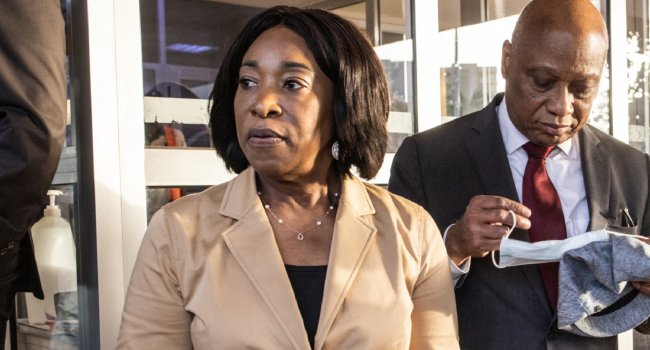
Botchwey was one of three candidates for the role, all of whom have advocated for Britain to address its colonial legacy and the issue of slavery.
She has served as Ghana’s foreign minister for the past seven years, during which she notably led the country’s two-year term on the UN Security Council, concluding in December 2023.
Read Also: Iran Reacts To Israel’s Attack
She has also supported the creation of a free trade agreement among Commonwealth nations and has expressed her belief in reparations, stating earlier this year, “Financial reparations is good.”
The position of Commonwealth Secretary-General allows for a maximum of two four-year terms. The current secretary-general is Dominican Baroness Patricia Scotland.
By tradition, the role rotates among the Commonwealth’s four geographical regions: the Pacific, Asia, Europe, and Africa, with Africa now up next.
In her social media announcement, Botchwey expressed gratitude for the support she received from Commonwealth Heads of Government, stating, “Truly humbled by the overwhelming support… The work indeed lies ahead!”
The Commonwealth focuses on promoting democratic governance, trade cooperation, education, climate advocacy, and financial transparency. While King Charles III serves as the head of the Commonwealth, the secretary-general oversees the London-based secretariat.
The summit in Samoa was initially expected to concentrate on climate change but became embroiled in heated discussions about reparations.
Read Also: Israel Launches Air Strikes On Iran
Many nations from Africa, the Caribbean, and the Pacific are urging Britain and other European powers to provide financial compensation for slavery or to engage in political reparations.
They are seeking a commitment from UK leaders to open discussions on reparatory justice, which may include financial payments. However, the British government has been reluctant to engage in this dialogue.
Bahamas Prime Minister Philip Davis emphasized the importance of addressing historical injustices: “The time has come to have a real dialogue about how we address these historical wrongs. Reparatory justice is not an easy conversation, but it’s an important one.”
He highlighted the lasting impact of slavery on communities, noting, “The fight for justice and reparatory justice is far from over.”
Experts estimate that between 10 to 15 million Africans were enslaved and transported to the Americas over four centuries, a toll that may never be fully understood, with the practice ending around 1870.
The British royal family, which profited from the slave trade, has faced increasing calls for an apology.
While King Charles acknowledged the painful legacy during the summit, he urged delegates to “reject the language of division,” stating, “None of us can change the past. But we can commit, with all our hearts, to learning its lessons and to finding creative ways to right inequalities that endure.”
 https://whatsapp.com/channel/0029VaihFajBadmT29ufud2Z





No Comments