

🎧
Listen to this article
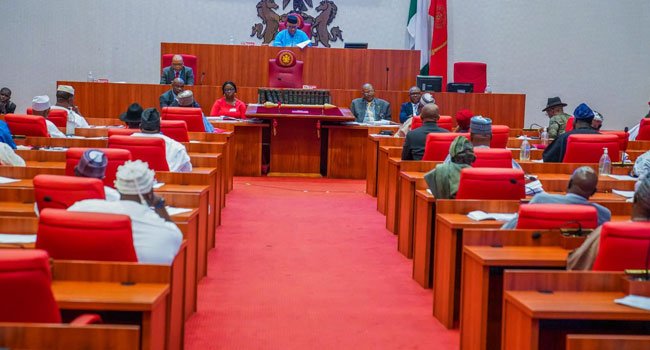
The Nigerian Senate has moved forward with the landmark Constitution Alteration Bill that seeks to establish state police across the federation.
This historic development marks a major step in the country’s decades-long debate over decentralizing the policing structure to address worsening insecurity.
The consideration of the bill follows the recent transmission of an executive version of the proposal by President Bola Ahmed Tinubu.
This legislative push is part of broader efforts to reorganize the country’s policing system to enhance security and better protect citizens, with the expectation that communities and local government areas will play more active roles in maintaining safety.
The proposed legislation establishes a state policing framework that operates concurrently with the federal system, effectively ending the exclusive control of policing by the Federal Government.
A key provision empowers state governors to appoint Commissioners of Police for their respective states, subject to confirmation by the state Houses of Assembly.
Under the proposed structure, while the Federal Police Service continues to be headed by the Inspector-General of Police, each State Police Service would be headed by a Commissioner of Police.
Additionally, governors may issue lawful written directives of a general policy nature to the Commissioner of Police on matters relating to the maintenance of public safety and public order within the state.
To address concerns that state governments might weaponize the new structure, lawmakers have included strict safeguards.
Proposed provisions state that a state Commissioner of Police shall not arrest, detain, investigate or deploy force against any person, political party or group merely for criticising the government except in accordance with the law.
The legislative process has been marked by a commitment to transparency, with leadership emphasizing that the open voting system promotes public confidence in how representatives stand on critical constitutional issues.
The proposal, which builds upon earlier legislative efforts, requires a two-thirds majority in the National Assembly and the endorsement of at least two-thirds of the State Houses of Assembly before it can be presented for presidential assent and become part of the Constitution.
Proponents argue that the current centrally controlled police structure is overstretched and unable to effectively tackle the growing challenges of banditry, terrorism, kidnapping, communal clashes and other forms of criminality.
Conversely, some have warned that state police could be abused by governors to intimidate political opponents and suppress dissent, a concern the current bill aims to mitigate through its legal safeguards.










No Comments