

🎧
Listen to this article
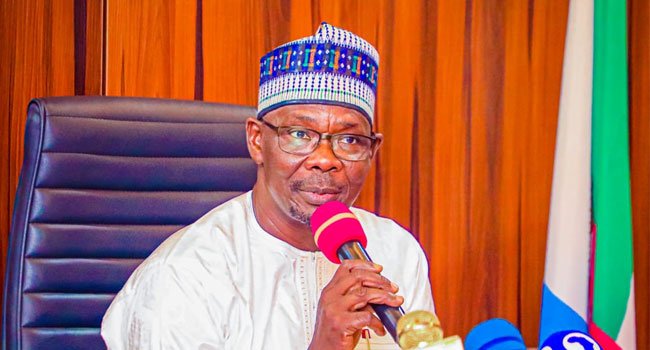
Nasarawa State Governor, Abdullahi Sule, has asserted that the All Progressives Congress stumbled during the August 15 Osun State governorship contest primarily because of meddling from external political actors based in the nation’s capital.
Sule highlighted that the final tally also served as a vivid reminder of the immense electoral advantage a sitting governor wields.
During a media briefing held on Tuesday in Lafia to review the closely fought race, Sule evaluated the broader political fallout.
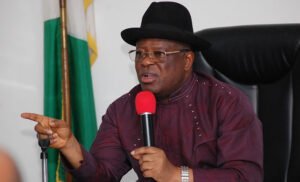
The contest saw the incumbent, Governor Ademola Adeleke representing the Accord Party, emerge victorious over the APC contender, Bola Oyebamiji, alongside several other candidates.
According to Sule, the ruling party’s defeat was engineered by select Abuja-based politicians who injected themselves into the state’s political arena right before the polls.
“I’m not going to brag about anything that we are going to do, but what I can tell you is that President Bola Ahmed Tinubu has done well,” Sule stated. “
And then I see some people are actually happy and they are celebrating that APC has lost. APC lost partly because of the Abuja politicians. Because if not for some of these Abuja politicians, there was no way for APC to lose in Osun.”
The governor stressed that the outcome clearly demonstrated the formidable influence associated with executive incumbency in regional elections. “
But what it means is that the power of a sitting governor is not something you can joke around. That’s the message that was sent actually in Osun,” he remarked.
Sule cautioned that critics celebrating the outcome might be misinterpreting the underlying dynamics at play. “
For people who are celebrating, they don’t even understand what the hell they are celebrating,” he noted. “What they are celebrating is that the power of a sitting governor in Osun is what has stopped them from winning.”
He concluded by emphasizing that the setback in Osun should not be misread as a rejection of federal policies under President Bola Tinubu’s administration, pointing instead to local political structures and incumbency dynamics as the decisive factors.






No Comments