


🎧
Listen to this article
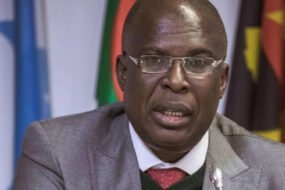
A Senior Advocate of Nigeria and member of President Bola Tinubu’s legal defense team in the United States, Wole Afolabi, has argued that the President would have been formally indicted, arrested, and prosecuted by American authorities if credible evidence linked him to drug trafficking.
Afolabi made the submission during an appearance on Channels Television’s Sunday Politics, responding to questions regarding the ongoing legal battle over the release of unredacted files held by the United States Department of Justice, Federal Bureau of Investigation (FBI), and Drug Enforcement Administration (DEA).
The agency documents are subject to a Freedom of Information Act (FOIA) lawsuit filed by transparency activist Aaron Greenspan, who is seeking full access to records concerning Tinubu and past investigative files.

The legal practitioner stated that US government agencies have already disclosed thousands of document pages to the plaintiff but are seeking to keep specific portions redacted, arguing that unredacted releases could compromise intelligence methodology, confidential sources, and active agents.
According to Afolabi, the decision by Tinubu’s defense counsel to challenge the release of the redacted sections is grounded in statutory rights provided under US law and does not constitute an effort to conceal incriminating information.
“This matter has been going on for quite some time, as you rightly said, and the DEA and other government agencies have produced documents and made available to Mr Greenspan.
“Now Mr Greenspan is asking that documents should be unredacted before they are handed over to him. The way the system works is this: it’s not what you want, it’s what the law stipulates.
“So precisely what we are doing is going under the coverage of the law. It’s what the law gives us the right to do. It would amount to professional malpractice on our part if we don’t take advantage of what the law offers,” he said.
Afolabi also rejected assertions that the US Department of Justice is withholding portions of the files specifically to shield the Nigerian leader.
He noted that a recent Department of Justice court submission emphasized safeguarding investigative gathering protocols rather than extending individual protection.
“In one of the recent filings that was made recently by the Department of Justice, it was stated in the footnote at page 24 that their concern is about the methodology by which information is gathered.
“No mention was made of any protection being offered to President Bola Ahmed Tinubu,” he said.
Afolabi stressed that US law enforcement aggressively prosecutes narcotics offenses globally, questioning why Tinubu would travel freely to the US without facing detention if prosecution grounds existed.
He cited historical law enforcement actions against former Panamanian leader Manuel Noriega, former British Virgin Islands Premier Andrew Fahie, Venezuelan officials, and various extradited foreign nationals as proof of US resolve in drug cases.
“So the question that should be asked reasonably is this: what’s so special about President Bola Ahmed Tinubu that he would be coming into America and leaving America without being arrested, detained or interviewed for anything?” he asked.
Afolabi asserted that the absence of a criminal indictment remains a crucial legal point, emphasizing that the constitutional presumption of innocence applies.
When asked directly whether Tinubu had ever been involved with illicit narcotics, Afolabi maintained that his position rests entirely on available legal records.
“What the evidence shows,” he said.
Addressing the $460,000 civil forfeiture proceeding in the 1990s, Afolabi maintained that civil asset forfeitures do not equate to criminal convictions or findings of personal guilt.
“If he was culpable, he simply would have been indicted. There’s no shortcut around it. He would have been indicted,” he said.
He declined to discuss personal communications with his client, citing strict legal privileges.
“I’m acting as his lawyer, and as a lawyer, there is what you call attorney-client privilege, and it’s taken very seriously over here. One can lose one’s licence very easily.
“Unfortunately, I can’t divulge any information that my client had disclosed to me confidentially. I’m sorry,” he said.
Reiterating why the legal team resists unredacting the records, Afolabi explained that the primary issue concerns agency safety standards and source protection.
He pointed out that US filings highlighted instances where members of the public targeted federal agents following public name disclosures.
When questioned on whether Tinubu had ever been the subject of an FBI or DEA inquiry, Afolabi refrained from a binary answer, pointing out that federal agencies routinely conduct background reviews without establishing guilt.
He recalled former FBI Director J. Edgar Hoover’s extensive files on prominent historical figures, including civil rights leader Dr. Martin Luther King Jr., to illustrate administrative record-keeping practices.
“Anyone can be a subject of investigation. That’s just how it goes. I mean, there’s a presumption of innocence,” Afolabi said.
He drew a clear distinction between being named in routine law enforcement databases and being criminally charged.
Afolabi further defended invoking statutory privacy rights for a sitting president, pointing to US President Donald Trump’s reliance on the Family Educational Rights and Privacy Act (FERPA) to protect his academic transcripts.
“The President of the United States, Donald J. Trump, wrote letters to the schools that he attended, Fordham, University of Pennsylvania, the business school, and even his high school, telling them that he was taking cover under FERPA, Family Educational Rights and Privacy Act.
“That is, academic records should not be released. And his records were not released. He won the presidency. So President Bola Ahmed Tinubu is not doing anything new. It’s been done here,” he said.
He maintained that public figures across democratic jurisdictions regularly utilize available legal protections to safeguard personal information.
“Everybody takes advantage of it. Everybody. If the law offers you protection, there’s a reason why the law is there,” he said.
Dismissing suggestions that the lawsuit will dictate the outcome of the 2027 presidential election, Afolabi expressed confidence that voters will judge the administration on governance performance.
“The Nigerian people knew who they voted for, and they know who is canvassing for re-election.
“At the end of the day, the election will not be decided on what document exists where. At the end of the day, it’s going to be decided by promises made, promises kept,” he said.
Afolabi concluded that the legal ongoing controversy presents no new revelations, pointing to Tinubu’s eight-year tenure as Governor of Lagos State as evidence of established public service.
The case remains pending before a US Federal District Court, where judges will determine what additional materials, if any, may be released.







No Comments