

🎧
Listen to this article
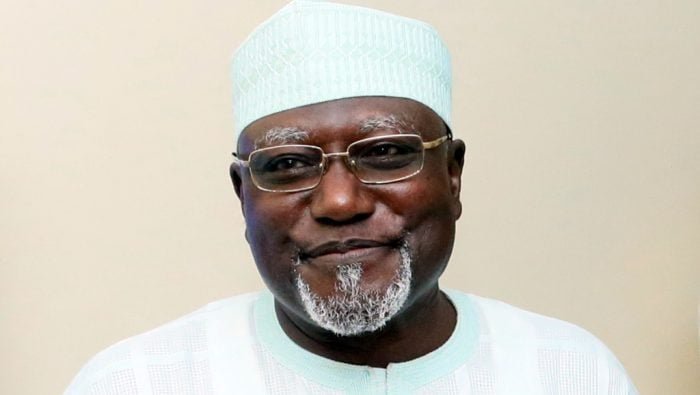
Former Director-General of the Department of State Services, Lawal Daura, has stated that the administration of the late former President Muhammadu Buhari suffered because several trusted political associates failed to justify the confidence reposed in them.
Appearing on Channels Television’s Politics Today program on Monday, Daura explained that Buhari’s government demonstrated the risks of permitting personal relationships and trust to dictate public appointments without evaluating competence.
The former intelligence chief noted that while Buhari surrounded himself with loyal figures, certain individuals ultimately betrayed that trust, adding that he was aware of the activities of sycophants and knew “the details of what they have done” while monitoring their activities.
Refuting long-standing allegations that he belonged to an influential cabal dictating government policies, Daura stated, “No, there is no cabal.”
Addressing his close proximity to power, he added, “Even if there was a cabal, the intelligence chief of a country can never be part of a cabal because the schedule I handled made it necessary for me to be close to the president at all times.”
Daura, who now serves as the vice-presidential candidate for the Allied Peoples Movement, urged critics evaluating Buhari’s 2015–2023 tenure to study Nigerian political history from 1995 onward to gain balanced context on governance challenges.
Challenging assessments of the administration, he remarked, “Yes, they can say it, but I also want them, the real students of history, to go back from 1995 to 2023, when he exited, and find out which were the worst years. I wasn’t part of the government then.”
Defending his operational record at the state intelligence agency, he stated, “And that will show you that I stood by him and I protected that government. Everything started to give way after 2018 since I left office.”
He clarified that the core failure stemmed not from deliberate sabotage, but from placing individuals in sensitive roles beyond their actual administrative capacity and character.
Advising future political leaders on governance, Daura recommended separating personal friendship from official suitability, stressing that appointments must strictly match an associate’s proven capability and professional merit.
Highlighting the need for proper alignment in public appointments, he advised, “And even if you are to do that, you must also weigh the quality of that person and then maybe place him in an office that befits him or is proportionate to maybe the level of trust you have in that person.”
Reflecting on the appointment process during the administration, he concluded, “But in that situation, an unfortunate situation, I would say, it so happened that people were just, you know, trusted.”



No Comments