

🎧
Listen to this article
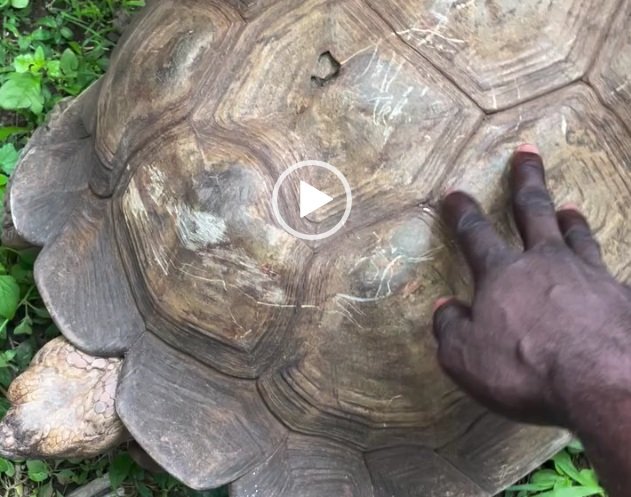
A giant tortoise believed to be 420 years old, popularly named Baba, has passed away at the palace of the Alaafin of Oyo in Oyo State.
Considered a cherished historical relic of the Oyo Kingdom, Baba died on Monday following a short illness and has been laid to rest.
The Director of Media and Publicity to the Alaafin, Bode Durojaiye, announced the event in an official press release issued in Ibadan on Thursday.


Durojaiye emphasized that successive Alaafins had taken care of the ancient reptile across generations.
“Baba was more than a turtle in status. He represented a part of the oral history of the Yoruba race. Now, the Alaafin has lost an ageless companion,” he stated.
Palace accounts trace Baba’s heritage to Oyo-Ile, the ancient capital of the Oyo Empire, before the tortoise was relocated to the present royal palace in Oyo town.
Over time, the animal became a famous tourist attraction, drawing visitors from far and wide due to its remarkable size and reported longevity.
Two designated palace aides were tasked with feeding and tending to Baba, whose diet primarily consisted of watermelon, grass, and corn pap wrapped in leaves.
The palace noted that the tortoise fell ill on Monday, lost its appetite, and subsequently died.
The statement elaborated, “While he was alive, Baba was more than a diapsid. He was arguably the oldest living mammal in the world. He was venerated and loved by the people, who turned his abode in the Palace into a tourist point.
“Baba, the turtle, must have drawn its name from the fact that it was the oldest creature. No one could call him by his name, so Baba was adopted, indicating that it was a male. He drew his own crowd. Strong and friendly, Baba was the reason many people trooped to the ancient Palace in its days.
“In Oyo, Baba was regarded as the oldest indigene. It was the Paramount Ruler’s most besotted pet. The Monarch met it in the Palace. Baba was nourished by a succession of kings, who inherited him as part of the relics of their ancestors.”
The royal estate also connected Baba’s legacy to traditional Yoruba cosmology regarding the relationship between the living, the dead, and the unborn, referencing Wole Soyinka’s famed play, Death and the King’s Horseman.
Describing Baba as a living symbol of ancestral history, the statement expressed deep sorrow over the monarch losing his long-time companion.
“Baba fell ill on Monday, just a little sickness and couldn’t eat anymore. Then he died. Just like that.
“He had since been buried. Good night, Baba,” the statement concluded.
See video below:








No Comments