

🎧
Listen to this article
The Federal Government has ruled out a return to the petrol subsidy regime, insisting that the economic reforms implemented under President Bola Tinubu were essential to rescue Nigeria from imminent collapse.
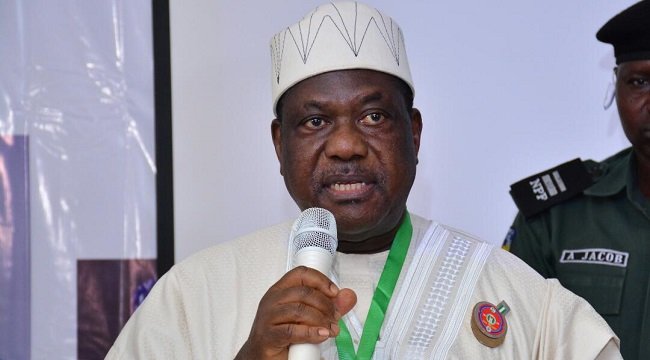
Secretary to the Government of the Federation (SGF), Senator George Akume, made the stance clear on Wednesday in Abuja during the 66th Independence Anniversary Lecture.
In an official statement issued by the SGF’s Special Adviser on Media and Publicity, Yomi Odunuga, Akume firmly stated: “We will not return to the ruinous petroleum subsidy regime of the past”.


He noted that the administration was forced to make tough policy decisions immediately upon taking office in 2023.
“This administration took office in 2023 and immediately took bold decisions needed to save the nation from imminent collapse. Such decisions include the removal of the petrol subsidy, unification of the foreign-exchange market, tax and other fiscal reforms, etc. These were difficult decisions, but necessary to rebuild stability and we have started enjoying the results,” he said.
Referencing data from the World Bank, Akume stated that Nigeria’s real Gross Domestic Product (GDP) expanded by 4.2 percent during the first half of 2026, marking an increase from the 3.9 percent recorded in the corresponding period of the previous year.
“The task before us now is to ensure that growth translates into jobs and higher incomes for all Nigerians,” he said.
The SGF highlighted that the national transition toward natural gas is significantly driving down transportation expenses for citizens, revealing that more than 120,000 vehicles have been successfully converted to Compressed Natural Gas (CNG), supported by over 400 conversion hubs and 90 fueling points nationwide.
“This shift is cutting fuel costs for motorists and commuters. CNG buses now carry millions of passengers at fares far below those of petrol buses,” he said.
Addressing the power sector, Akume explained that the government tackled persistent structural bottlenecks “by clearing legacy debts, increasing investment, and improving transmission and billing.”
He further emphasized that the nation has experienced “massive investment in infrastructure” over the past three and a half years.
According to him, transformative arterial projects—including the Lagos–Calabar Coastal Highway, the Abuja–Kano Expressway, the East-West Road, nationwide railway modernizations, and deep sea port upgrades—are set to enhance regional trade networks and stimulate long-term economic growth.
He added that the administration is simultaneously expanding access to mortgage financing to jumpstart housing development and generate employment.
Turning to agricultural development, Akume confirmed that the World Bank approved a $500 million credit facility to fund the Nigeria Sustainable Agricultural Value-Chains for Growth (AGROW) scheme.
“This initiative will raise smallholder productivity, strengthen value chains, and improve food and nutrition security,” he said.
Speaking on youth development initiatives, he noted that young people under 25 constitute more than 60 percent of the national population.
“We have expanded the Education Loan Fund so that millions of students can afford university and vocational studies. We are strengthening technical and vocational institutes to teach the skills that industry needs. Our young people are not just leaders of tomorrow – they are partners in building Nigeria today,” he said.
He also appealed to Nigerians in the diaspora to channel capital back home, noting that they contribute “not just remittances, but ideas, investments and pride.”
On public health and social welfare, the SGF stated that thousands of primary healthcare facilities are being upgraded while social safety net programs are being broadened to deliver targeted cash transfers and vital support services to vulnerable households.
On national security, he commended the armed forces, revealing that equipment upgrades, intelligence integration, a new National Threat Assessment, and a five-year Strategic Defence Plan are being actively deployed.
“Nothing matters more than the safety of our people. When communities have opportunities and trust in justice, crime and violence decline. In that sense, development and security go hand in hand,” he said.
Delivering his address at the event, the Minister of Information and National Orientation, Alhaji Mohammed Idris, revealed that the economy registered a 4.43 percent growth rate during the second quarter of 2026.
Idris added that domestic refining capacity is scaling rapidly, with international investor confidence “returning to critical sectors.”
He acknowledged that the economic policy shifts over the last three years “have not been easy” and “have demanded sacrifice and patience from Nigerians.”
The Minister concluded by calling on media practitioners and citizens to foster constructive dialogue as the next political season approaches, emphasizing that stakeholders carry a shared duty to promote verified, factual public engagement.
“Political differences are legitimate in a democracy; they must never diminish our common identity as Nigerians,” he said.









No Comments