

🎧
Listen to this article
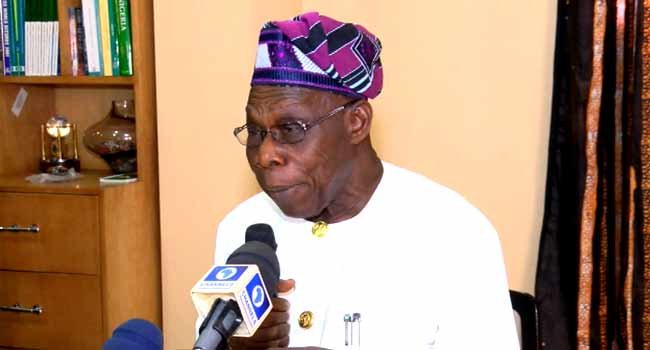
Former President Olusegun Obasanjo on Sunday shared details on how he has successfully handled diabetes for over forty years.
He credited his longevity to a dynamic lifestyle, controlled eating habits, consistent workout routines, proper rest, scheduled health assessments, and careful compliance with his prescriptions.
Obasanjo gave these insights during the kick-off of the “Lagos to the World” expedition, an international road trip organized to raise awareness about cancer, emphasize early diagnosis, and foster African unity.
The gathering took place at the Olusegun Obasanjo Presidential Library (OOPL) located in Abeokuta, Ogun State.
While praising the project—which was put together by businessman and BMW fan Erik Nwagwu to honor his late mother and sister who succumbed to cancer—the former president used the platform to highlight the necessity of wholesome living and timely medical checkups.
He commended Nwagwu for transforming a private tragedy into a public crusade capable of saving lives.
Opening up about his personal health background, Obasanjo stated that he has been living with diabetes for over four decades.
Obasanjo said: “I have a disease that is not curable yet and that’s diabetes. I have been diagnosed diabetic more than 40 years ago. I still manage it.”
The elder statesman noted that sticking to a rigorous daily regimen has kept him physically sharp despite his advanced years.
He said: “But what do I do? I play squash three times a week — Monday, Wednesday and Fridays, if I’m around. I watch what I eat. Diet can be exciting, can be pleasurable. But if you eat badly, then the consequence can also be bad on you. And then rest.”
In his view, getting enough sleep is just as critical as good nutrition and physical workouts.
He said: “You saw me early this morning. Then I went to church. Then I came back and I told my boy that the only time he can wake me up is when you come. And when I must rest, I will rest.”
Obasanjo broke down his formula for a healthy life using an acronym he coined as “DREMS.”
Obasanjo said: “So diet, rest, exercise is very, very important. And then there’s what I call DREMS. D — Diet, R — Rest, E — Exercise and M — Medical.”
He concluded by underscoring the value of regular clinical screenings and early detection, advising aging Nigerians to prioritize routine medical checks.









No Comments