

🎧
Listen to this article
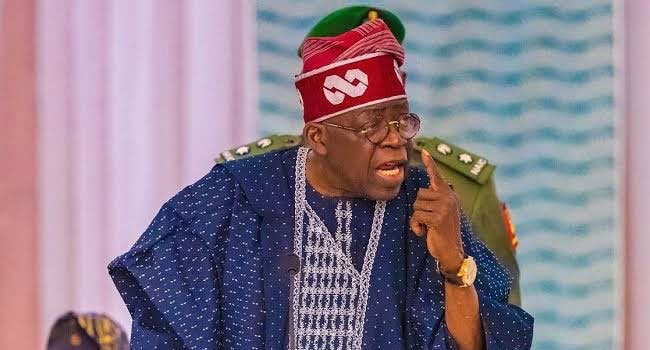
President Bola Tinubu has cautioned state governors against constructing expensive flyovers in areas with minimal traffic, advising them instead to channel their significantly increased federal allocations into critical road networks and security infrastructure.
Speaking on Thursday at the State House in Abuja, the President noted that states are currently receiving four to five times their previous allocations from the Federation Account.
He made the remarks while receiving a delegation of traditional rulers from Oyo State, led by the Olubadan of Ibadanland, Oba Rashidi Ladoja, who visited to congratulate him on the successful rescue of abducted schoolchildren and teachers from Oriire Local Government Area.
Directing his comments to former governors present in the delegation, Tinubu highlighted the current financial standing of states:“The cost of operation is high. But the money that I’m pushing to the states, if you had it during your own time, or during my time, it would have been different… They are taking four to five times their money. Nobody is borrowing money to pay salaries now. Pensioners are receiving their pay.”
He strongly advised sub-national leaders to prioritize grassroots development and security accessibility over prestige projects: “They should do more instead of building flying over where there is no numeric traffic; build roads and artery networks to really enhance the quality of life and the accessibility of the security agencies to penetrate those areas.”
Addressing the successful rescue of the Oriire abductees after 56 days in captivity, President Tinubu revealed that the kidnappers had demanded both a ransom and the release of detained members of their criminal syndicate. He maintained that his administration flatly rejected their conditions.
“We refuse to negotiate for ransom. These criminals wanted us to release from detention members of their criminal gangs that were already arrested, that was one of their conditions, outside of the money they were looking for. And we said no deal. We are not going to negotiate with criminals.”
Highlighting tactical adjustments following the incident, the President noted that his directive to expand the Nigerian Army from eight to 12 divisions was designed to shorten response times and enhance operational capabilities against banditry and terrorism.
Furthermore, he pointed out that regional security challenges—exacerbated by instability in Sahel neighbors like Mali, Burkina Faso, and the Niger Republic—make the strengthening of forest guards and the creation of a well-guarded state police system an urgent necessity.






No Comments