

🎧
Listen to this article
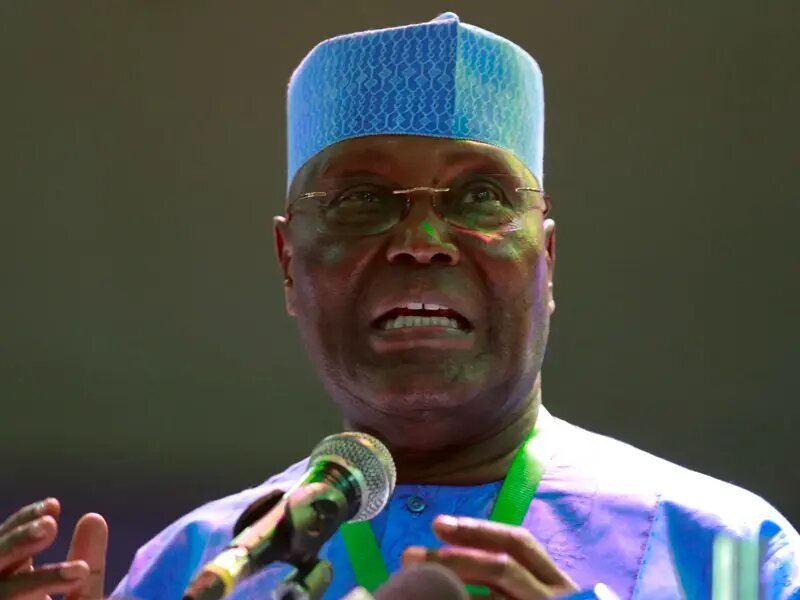
Former Vice President Atiku Abubakar has pledged to reopen Nigeria’s land borders if he emerges victorious in the 2027 presidential election.
The presidential candidate of the African Democratic Congress (ADC) made this commitment while speaking to supporters in a viral video posted on Friday by ADC chieftain Dele Momodu.
Atiku maintained that the closure of Nigeria’s international borders with neighboring countries severely damaged transborder commerce and triggered widespread joblessness among young citizens.

“The Northern states is bordering Cameroon, Chad, Niger, Benin Republic,” Atiku noted.
“And you close all those borders. All our young men who are doing trading between these countries, they carry goods across, they do this and that, all what we call transborder trade is a legitimate business,” Atiku said.
He further lamented that numerous young entrepreneurs who previously operated thriving enterprises with tens of millions of naira in capital were driven into bankruptcy by the border policy.
“All the upcoming young men and women who used to have a capital of 10 million, 20 million, and they were employing two, three other people, and then all of them went bankrupt and unemployed. How can there be security?” he asked.
“So I said I am going to reopen the borders and I will,” he added.
Alongside the border policy, Atiku revealed plans to optimize cargo movement by upgrading port facilities across the southern region.
“During the last campaign, I went across to Europe to discuss with shippers and ship development companies how we can together develop South and South-Eastern ports so that there is balance as far as importation of goods and transportation of goods are concerned,” he said.
The ADC candidate explained that expanding port infrastructure in the South would cut down transit times and expenses for delivering goods to the North-East.
He referenced the logistical delays in shipping containers to his factory in Yola, Adamawa State, from Lagos ports.
“So when, if I drop my container in Calabar or in Uyo or in Port Harcourt, it will just take me 24 hours to take the container to Yola,” Atiku stated.
“But right now, it takes me not less than two months to take my container from Lagos because you have to cross over from South-West, you go to North-East, and then there is even no road,” Atiku said.
He emphasized that his proposed reforms directly reflect popular demands regarding cargo transport efficiency and southern port development.
Nigeria’s land borders were initially shut down in August 2019 under former President Muhammadu Buhari’s administration.
The Federal Government defended the measure as a necessary step to halt cross-border smuggling of foreign rice, poultry products, refined petroleum, small arms, and illicit drugs, while boosting local food production.
By December 2020, Buhari approved the reopening of four major entry points: Seme Border in Lagos State, Illela Border in Sokoto State, Maigatari Border in Jigawa State, and Mfun Border in Cross River State.
Under President Bola Tinubu’s administration, the Federal Government reopened the Tsamiya land border post with Benin Republic in Kebbi State and the Kamba trading corridor connecting Nigeria to Niger Republic in February 2026.
At the time, the Nigeria Customs Service stated that the partial reopening would operate alongside enhanced security mechanisms to thwart smuggling.
Despite these gradual reopenings under official supervision, several key land border corridors remain restricted or under tight controls.






No Comments