

🎧
Listen to this article
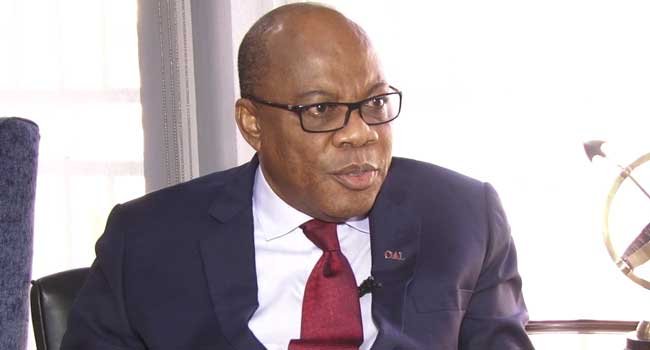
Dr. Olisa Agbakoba (SAN), a former President of the Nigerian Bar Association (NBA), has asserted that the Independent National Electoral Commission possesses no legal backing to stop media organizations and citizens from publishing election tallies already made public at individual polling stations.
Agbakoba contended that restricting such reportage would directly infringe upon constitutional guarantees protecting freedom of expression.
The controversy stems from remarks made on September 24, 2026, by the INEC Chairman, Prof. Joash Amupitan (SAN), while speaking at the 24th All Nigeria Editors Conference (ANEC 2026) in Enugu. Amupitan cautioned media houses against independently broadcasting or sharing collated voting results prior to formal announcements by the electoral commission.
The INEC boss warned that premature disclosures could generate confusion among the electorate and erode public trust in electoral outcomes, simultaneously advising newsrooms to step up digital verification standards against fake news and artificial intelligence deepfakes.
Responding via an open letter addressed to Prof. Amupitan on October 12, 2026, Agbakoba referenced a landmark 1984 Lagos State High Court ruling that defended the press’s right to disseminate lawfully gathered electoral data.
He emphasized that while INEC retains the exclusive constitutional mandate to announce final winners, this authority does not translate into a monopoly over public information regarding votes cast.
Agbakoba challenged the commission to guarantee unhindered public access to polling unit result sheets ahead of the 2027 general elections, specifically requesting that documents uploaded to the INEC Result Viewing Portal (IReV) remain fully open for independent checks by journalists, observers, political parties, and voters.
His intervention highlights ongoing debates surrounding transparency in vote recording, electronic transmission, collation, and declaration procedures.
Backing his legal standpoint, Agbakoba pointed to Section 39(1) of Nigeria’s 1999 Constitution (as amended), which secures the citizen’s right to receive and impart information, underpinning the legitimacy of publishing verified polling returns.
He argued that publicizing figures extracted from authentic polling unit sheets does not usurp the electoral body’s statutory responsibility to return winners.
To reinforce his argument, the senior lawyer cited the precedent set in Nigeria Union of Journalists and Others v. Inspector-General of Police and Others (Suit No. M/191/83), where the Lagos High Court invalidated directives aimed at barring media houses from publishing preliminary election results not yet greenlit by the defunct Federal Electoral Commission.
Agbakoba noted that the judicial reasoning distinguishing between official final declarations and the publication of raw polling center figures remains entirely applicable under the Electoral Act 2026.
“Access should be meaningful, not merely nominal,” he remarked, cautioning that permitting citizens to inspect polling sheets while discouraging them from discussing or analyzing the data defeats the core objective of transparency.
Furthermore, Agbakoba called on INEC to implement explicit protocols for prompt digital uploads onto the IReV platform and establish frameworks for reconciling discrepancies between uploaded documents and physical collation records.
He suggested that the commission set operational targets to ensure verified figures are accessible within two hours of polling closures or counting completions.
The former NBA leader noted that timely data access empowers citizens and party agents to run independent comparisons, isolate inconsistencies, and verify whether final declarations align with actual polling booth votes.
He concluded that transparent record-sharing would enhance institutional credibility, minimize avoidable disputes, and reduce post-election litigation.







No Comments