

🎧
Listen to this article
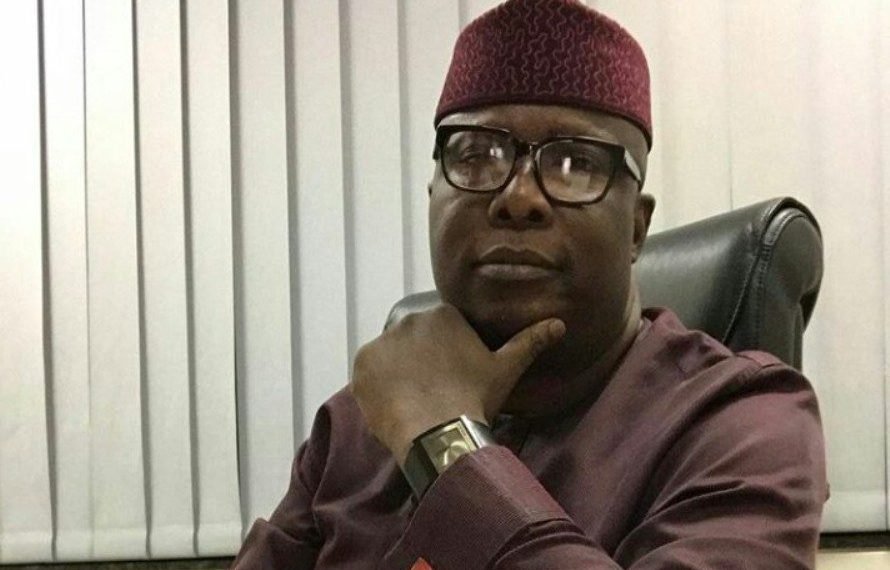
In a strong “Personal Declaration of Conscience” released on Friday, April 3, 2026, former presidential aide and APC chieftain Babafemi Ojudu officially stated that he will not serve in President Bola Ahmed Tinubu’s administration.
Ojudu made it clear that his refusal to seek or accept a political appointment is a matter of long-standing principle, declaring, “I do not covet any position in this government. I have neither sought nor lobbied for one, directly or by proxy, nor have I conveyed such ambition in any interview or private conversation. This is not a recent posture.”
He emphasized that his stance predates the current government and has remained consistent “without equivocation, without double-speak.”
While reaffirming his membership in the APC and his refusal to defect for political convenience, the former senator described himself as part of a “conscientious objectors” bloc within the ruling party.
Read Also: Tinubu’s Ambassadors-Designate Accepted By Host Countries
He argued that being a loyal party member does not mean one must remain silent or suppress dissent. “Loyalty does not demand silence, and patriotism is not servility,”
Ojudu stated, maintaining that his position is an “expression of fidelity to my own principles” rather than an act of personal animosity toward the President.
He warned that a nation cannot progress if its citizens choose “the comfort of unanimity over the discipline of truth,” insisting that “silence, in the face of error, is not neutrality—it is complicity.”
Ojudu also used the declaration to address recent misinformation, revealing that a “long-time associate” had circulated a misleading video suggesting he was angling for government patronage.
He countered this by highlighting his consistent advocacy for empathy in governance and a clear geopolitical direction for Nigeria, noting that his interventions were driven by patriotism rather than opposition.
Drawing a parallel to his resistance during the Sani Abacha military regime, where he refused to compromise his values even while in detention, he declared, “I did not yield then. I will not yield now.”
His remarks underscore a growing debate within the APC regarding the role of critical, independent voices in shaping the party’s future.
BELOW IS THE FULL STATEMENT BY MR OJUDU
A Personal Declaration of Conscience, By Babafemi Ojudu
History is not a passive record; it is an active force. It shapes memory, guides judgment, and ultimately determines how men are weighed long after they are gone. To distort it is not a harmless indulgence—it is an assault on truth itself. Indeed, as the philosopher George Orwell warned, “Who controls the past controls the future; who controls the present controls the past.” Falsehood, once etched into the permanent ledger of print and the restless archive of the internet, hardens into accepted truth. It is for this reason—and this reason alone—that I write. Not to define myself, for I am not in need of such validation, but to ensure that the record is not left to the mercy of distortion.
Let it therefore be clearly stated: I, Babafemi, son of Jimoh Ojudu, do not covet any position in this government. I have neither sought nor lobbied for one, directly or by proxy, nor have I conveyed such ambition in any interview or private conversation. This is not a recent posture. It is a position I took long before this administration came into being, and one I have maintained consistently—without equivocation, without double-speak.
I am not given to speaking from both sides of the mouth. I speak plainly, even when it is inconvenient, even when it carries consequences. That is the discipline I have imposed upon myself, and it is one I expect those around me to respect. My resolve on this matter is firm.
Let me also say, without ambiguity, that I remain a politician and a member of the APC. I do not believe in the easy convenience of party-hopping.
To me, such conduct lacks fidelity. I have often likened it—perhaps crudely, but truthfully—to a restless search for advantage without principle. That is not my nature. Should the day come when I can no longer, in good conscience, remain within a political structure, I will withdraw quietly and pursue other paths that give meaning to life.
Within the APC, I belong to a small but necessary minority—the conscientious objectors. We are those who believe that loyalty does not demand silence, and that patriotism is not servility. We speak when things are not right, not to undermine, but to strengthen. It is my belief that, with patience and resilience, voices such as ours may yet help redirect the course of the party toward its better self.
We owe that duty to Nigeria.
A nation cannot progress if all its citizens choose the comfort of unanimity over the discipline of truth. There must always be those willing to say, “This is not right,” even when it is unfashionable. As Edmund Burke is often credited with saying, “The only thing necessary for the triumph of evil is for good men to do nothing.” Silence, in the face of error, is not neutrality—it is complicity.
Over the past two years, I have exercised this duty in good faith. I have written about the necessity of diplomacy in a modern state, reminding us that even in the era of Mansa Musa, envoys were indispensable instruments of influence.
I have raised concerns about Nigeria’s shifting geopolitical posture, and I have called for empathy and visible compassion in moments of national grief. In each instance, I have spoken not as an adversary, but as a patriot—critical, yes, but not disagreeable.
We have seen, in our history, the dangers of blind allegiance. Under military regimes, we witnessed the spectacle of orchestrated praise, the silencing of dissent, and the eventual collapse of those very structures when truth could no longer be suppressed. Those who cheered the loudest were often the first to denounce when the tide turned. That is not a path I will walk.
So, to those who would prefer that I conform—to think as they think, to act as they act—I say this: we are not all cut from the same cloth, nor should we be.
A few days ago, I was informed that a long-time associate was circulating a distorted video about me. I reached out to him directly and reminded him, calmly but firmly, that I am not a man driven by hunger for office, nor one who survives on the crumbs of patronage. I have taken a position, and I intend to hold it—come what may.
His response was apologetic, attributing the matter to careless forwarding. I have chosen to leave it at that. But the incident speaks to a larger problem—the deliberate manufacturing of falsehoods by those who profit from distortion.
To them, I say: let me be.
I am not seeking a job. I will not accept one if offered. This is not an act of defiance against the President; it is an expression of fidelity to my own principles. At this stage of my life, I cannot—indeed, I will not—learn the art of convenient compromise.
If I were of that disposition, I would have broken long ago—perhaps in those dark months under Abacha, when solitary confinement and calculated pressure were deployed to bend my will and extract what I knew. I did not yield then. I will not yield now.
This is who I am. And this is where I stand.







No Comments