

🎧
Listen to this article
A disturbing new video showing a woman being assaulted during a cultural festival in Delta State has gone viral, sparking widespread condemnation across social media.
Nigerians are calling for a full-scale investigation and stricter oversight of traditional practices following the circulation of the footage.
The incident reportedly took place during the Urheovware, an Urhobo Cultural Festival held in Edjeba, Warri South.
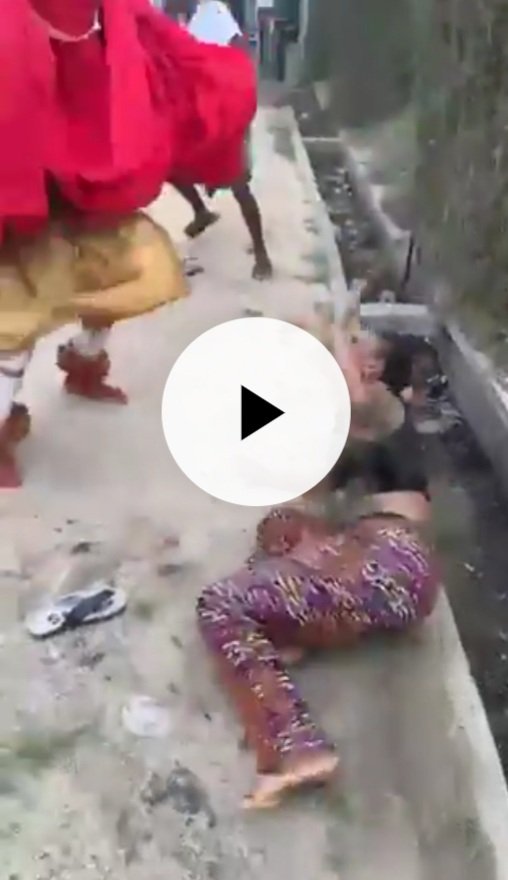
While official confirmation is still pending, the video captures a harrowing scene where a woman, lying on the ground near an open drainage, is seen “screaming as a masquerade dressed in a red-and-yellow costume repeatedly strikes her with a cane-like object.”
The victim is shown “barefoot, visibly distressed,” and desperately “attempts to shield herself while crawling away from the attack.”
Despite her obvious pain and attempts to flee, the masquerade continues the beating in front of onlookers.
The clip eventually shows the woman “sitting on the edge of the drainage, crying out in pain while the masquerade walks away from the scene.”
This latest violence comes on the heels of the recent Alue-Do (fertility) festival in Ozoro, where viral clips showed “groups of young men chasing, stripping, groping, and sexually assaulting women and female students in public.”
One particularly graphic video from that event showed a woman “forced onto all fours with her bra torn while being molested.”
Those earlier incidents drew heavy fire from the Delta State Government, First Lady Oluremi Tinubu, and organizations like WIMBIZ and the NBA, who labeled the acts “barbaric and a stain on womanhood.”
While social media users referred to the Ozoro event as a “rape festival,” police—who have arrested between 15 and 18 suspects—noted that the four women who came forward “described sexual assault and humiliation but denied being raped.”
This fresh case in Warri South has reignited the national debate on the line between cultural heritage and the fundamental rights of women, with many demanding that traditional festivals no longer be used as a cover for gender-based violence.
See video below:










No Comments