

🎧
Listen to this article
As of Monday, June 29, 2026, the price of Liquefied Petroleum Gas (LPG)—widely referred to as cooking gas—remains a major concern for households nationwide.
Despite ongoing government discussions and regulatory interventions, the market is currently experiencing significant price volatility, with costs differing sharply depending on whether you are buying at the depot, a retail station, or a roadside outlet.
The Price Breakdown: Where You Buy Matters
The cooking gas supply chain in Nigeria involves several layers, and each layer adds costs related to logistics, storage, and retail margins.
-
Depot Price (Bulk): This is the price marketers pay to lift the product. As of late June 2026, marketers have reported paying between ₦25 million and ₦26 million for 20 metric tonnes. When broken down, this puts the depot price at a high baseline before any transport or retail profit is added.
-
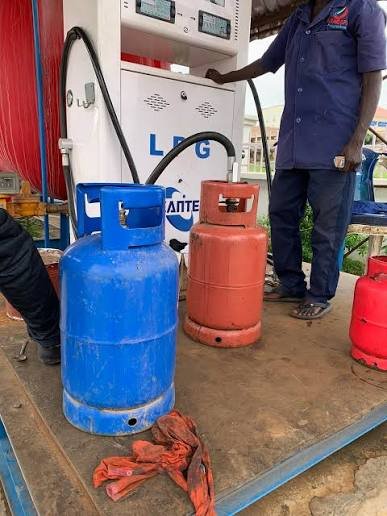
Retail Station Price: These are the established gas plants you see in neighborhoods. Due to the high cost of transportation (largely driven by expensive diesel for trucks) and the operational overhead of running a registered plant, these outlets are currently selling between ₦1,600 and ₦2,000 per kilogram.
-
Roadside/Informal Retail Price: Often found in smaller quantities, these retailers are frequently the most expensive. Because they often source gas in smaller volumes or face higher supply risks, their prices currently range from ₦2,000 to ₦2,500 per kilogram.
The 12.5kg Household Reality
For the standard 12.5kg cylinder used by most Nigerian families, the combined effect of these supply chain costs means households are consistently paying between ₦25,000 and ₦31,000 to refill.
Why Prices Are High Regardless of Where You Buy
The discrepancy between the cost at the depot and the final price at your local station is driven by several systemic issues:
-
Logistics and Distribution Bottlenecks: Transporting gas by road is expensive. High fuel costs mean that the farther a state is from the coastal depots, the higher the price.
-
Export vs. Domestic Priorities: Industry experts have noted that even with increased domestic production, a significant portion of gas is still tied to export-oriented contracts, leading to tighter local supplies.
-
Operational Overheads: Licensed retailers must cover safety, maintenance, and staffing costs, which are all rising due to general inflation and foreign exchange pressures on imported spare parts.
Regional Price Trends
-
High-Cost Zones: States located in the North-West (e.g., Kaduna) and North-Central regions consistently report the highest prices because they are the farthest from the major coastal import and processing terminals in the South.
-
Competitive Zones: States with direct access to terminals and processing hubs, such as Lagos, Rivers, and Delta, generally see the most competitive pricing, though they are still significantly impacted by the national surge in costs.









No Comments