

🎧
Listen to this article
Lagos State has officially been ranked as the most indebted state in Nigeria, according to the latest figures for the fourth quarter (Q4) of 2025.
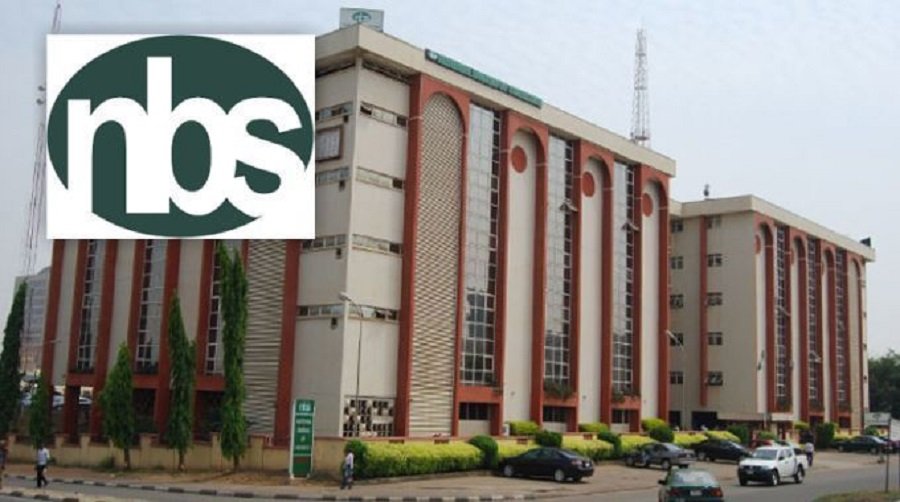
Data released by the National Bureau of Statistics (NBS) on Monday reveals that the state’s financial obligations have reached a staggering ₦1.22 trillion in domestic debt and $1.17 billion in external debt.
The NBS “Nigeria’s Q4 2025 Domestic and External Debt Report” shows a significant surge in the country’s overall debt stock.
Nigeria’s total public debt rose by 3.90% within just one quarter, climbing from ₦153.29 trillion ($103.94 billion) in Q3 to ₦159.28 trillion ($110.97 billion) by the end of 2025.
The report breaks down the national debt as follows:
-
Total Domestic Debt: ₦84.85 trillion (53.27% of total debt).
-
Total External Debt: ₦74.43 trillion (46.73% of total debt).
Lagos holds the top spot for both domestic and foreign borrowing among subnational governments.
-
Domestic Debt Giants: Following Lagos (₦1.22 trillion) is Rivers State, which owes ₦378.81 billion. On the opposite end, Jigawa recorded the lowest domestic debt at ₦1.60 billion, followed by Ondo with ₦8.42 billion.
-
External Debt Leaders: Lagos leads with $1.17 billion, followed by Kaduna with $684.29 million. The FCT maintains the lowest external profile at $26.80 million, followed by Zamfara at $41.93 million.
Other states carrying heavy burdens include Bauchi ($220.57 million / ₦156.05 billion), Delta ($63.42 million / ₦248.83 billion), and Enugu ($99.88 million / ₦157.60 billion).
The escalating debt has sparked fresh concerns regarding Nigeria’s ability to fund development.
Earlier this month, the World Bank warned that rising service costs are “crowding out” essential investments.
The bank noted that capital spending has dropped to just 1.0% of GDP, down from 1.3% in 2024.
The International Debt Report 2025 suggested that Nigeria must urgently pursue fiscal reforms:“Nigeria and other Sub-Saharan African countries must initiate what it call export diversification and fiscal reforms to address their rising debt challenges.”
The report further highlighted that:“Debt levels and servicing burdens continued to rise even as growth remains subdued, underscoring persistent fiscal stress.”







No Comments