

🎧
Listen to this article
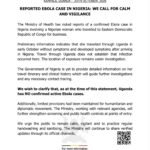
Uganda’s Ministry of Health has refuted reports alleging an active Ebola outbreak within its borders following Nigeria’s confirmation of an imported case in the Federal Capital Territory (FCT), Abuja.
The Federal Government had on Tuesday confirmed a single case of the viral disease in Abuja, involving a female traveler who recently arrived in the country from East Africa.
The development comes amid a broader regional health concern linked to an active Bundibugyo Ebola virus outbreak originating in the Democratic Republic of the Congo (DRC), which has caused cross-border infections across neighboring nations.


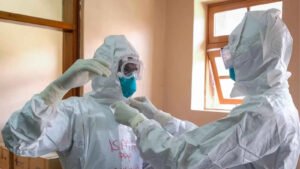
Providing details during a press briefing in Abuja, the Coordinating Minister of Health and Social Welfare, Prof. Muhammad Ali Pate, confirmed that laboratory analysis verified the diagnosis after the patient exhibited symptoms following her arrival.
Pate explained that the traveler landed in Nigeria on October 7, 2026, on an international flight from Uganda, before her condition deteriorated four days later, leading to her admission to a private health facility in the nation’s capital.
The patient, a woman who recently arrived in Nigeria on an international flight from Uganda, was admitted to a private hospital… where she received care for several days before the diagnosis was confirmed,
a official government statement noted. She is currently in isolation and receiving medical care.
The minister confirmed that public health response teams have instituted strict contact tracing protocols, identifying 44 primary contacts who are currently undergoing mandatory surveillance and daily health monitoring.
He added that the Federal Ministry of Health, the FCT Health Secretariat, and the Africa Centres for Disease Control and Prevention (Africa CDC) are collaborating closely to enforce containment standards and fortify screening operations across international airports and land borders.
Pate urged citizens to remain calm and maintain heightened personal hygiene practices, emphasizing that healthcare providers across public and private hospitals must elevate their index of suspicion for symptomatic patients.
Reassuring the public, the health minister highlighted that Nigeria is leveraging epidemiological expertise gained during the successful containment of the 2014 Ebola outbreak to manage the current incident swiftly.
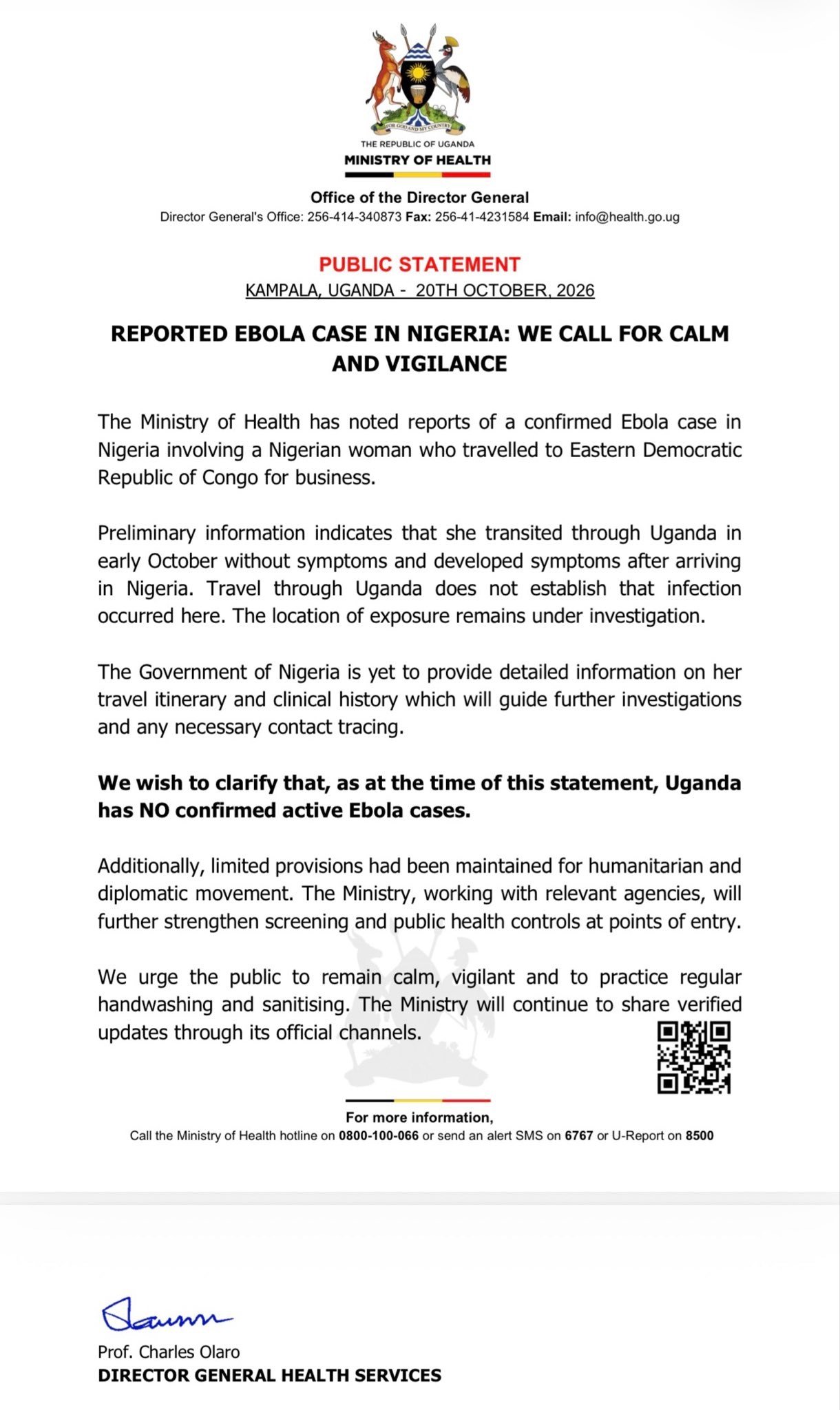
Pushing back against assertions tying the infection directly to local transmission within its territory, the Ugandan Ministry of Health issued a public counter-statement on Tuesday.
The location of exposure remains under investigation,
the Ugandan health authority stated, clarifying that transit through its territory alone does not provide sufficient evidence to pinpoint where the patient contracted the virus.
The ministry indicated that it has not yet received detailed flight itineraries, passenger logs, or clinical history from Nigerian health authorities to assist in tracing potential exposures or verifying travel contacts.
Nevertheless, Ugandan health authorities confirmed that border screening measures and port-of-entry health controls have been intensified across transit hubs, maintaining limited travel provisions for diplomatic and humanitarian corridors.
The diplomatic exchange coincides with reports from Kenya, which recorded its ninth confirmed Ebola case on Tuesday within a known transmission cluster, after its initial index case traveled from the DRC through Uganda into Nairobi.
Although Uganda recorded isolated Ebola cases earlier in 2026, health officials formally declared the previous outbreak over after satisfying international public health protocols and completing mandatory surveillance periods without new infections.
According to public health guidelines, the Ebola virus is transmitted through direct contact with blood, secretions, or bodily fluids of infected individuals, presenting symptoms such as high fever, severe headache, acute body weakness, vomiting, and diarrhea.






No Comments