

🎧
Listen to this article
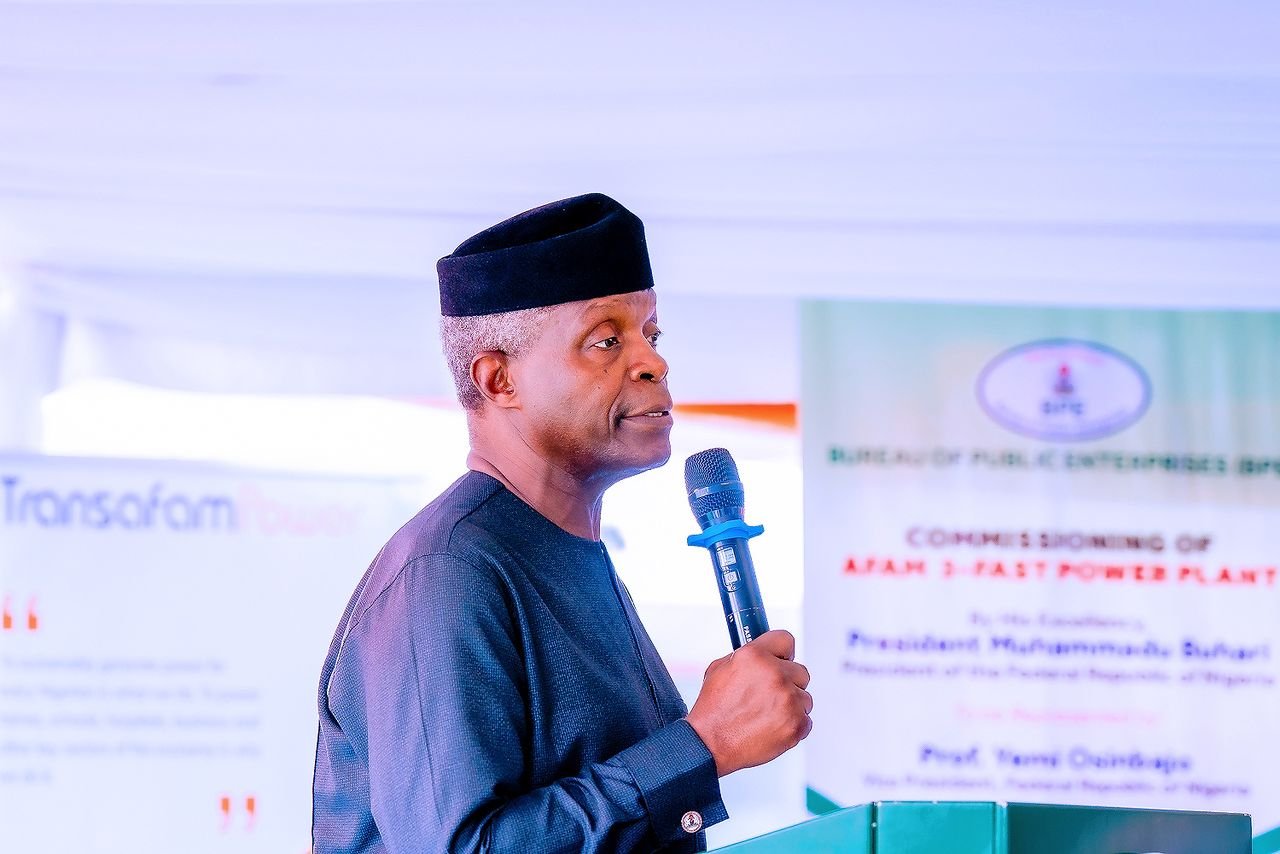
Former Vice President Yemi Osinbajo, a professor of law, has called for a fundamental restructuring of Nigeria’s legal and judicial philosophy, specifically criticizing the tendency of courts to “prioritis[e] technicalities over substantive justice.”
Osinbajo spoke yesterday in Ilorin, Kwara State, at the second Professor Yusuf Ali’s Annual Lecture organized by the Kwara State University (KWASU), Malete.
The former Vice President argued that the “essence of any justice system is to serve the people, not to glorify procedural formalities.”
Read Also: Things You Don’t Know About New INEC Chairman Joash Amupitan
He expressed concern that many judicial decisions, including those of the Supreme Court, frequently “leaned towards form rather than substance.”
He pointed out that even the “English courts, whose practices we inherited, have evolved beyond such rigid technicalities by allowing amendments at any stage to ensure justice is done.”
Osinbajo posited that “Nigeria’s continued attachment to outdated technicalities undermined justice and eroded public trust in the judiciary.”
He therefore urged legal practitioners, academics, and policymakers “to adopt critical, decolonised thinking to reform legal education, legal practice, and the administration of justice.”
He added that while the Supreme Court has occasionally been flexible, especially in electoral matters, “inconsistency remains a major concern.”
“It is important to note that a justice system that glorifies form over substance risks losing its relevance and effectiveness,” he said.
The guest lecturer, Professor Chidi Odinkalu (SAN), urged Nigerian lawyers and law students to “confront and dismantle the lingering colonial legacies embedded in the nation’s legal system.”
Odinkalu, who spoke on the topic Towards Decolonising Legal Briefs: Effective Implementation of the Local Content Law for the Benefit of Nigerian Lawyers, noted that “Nigeria’s justice system is still hooked to the rest of the world.”
He stressed that it was time to transition from political independence to ideation independence by promoting local content, stating that although Nigeria is politically independent, “we lack occupational independence.”
The professor of Practice and International Human Rights Law stressed that the country’s legal framework still “bore the imprint of the colonial intrusion and needed to be changed,” emphasizing the need to build an “independent and credible judiciary” as a core part of the decolonization process.
Separately, Professor Yusuf Ali stated that all nations must have a “rallying point,” which he noted Nigeria currently lacks.
The eminent lawyer said the only time Nigerians truly become united is during international football matches, a “fleeting moment of togetherness that quickly faded afterward.”
He urged citizens to confront the reality of systemic failures instead of romanticizing the past, noting that the country still “exhibited all the parameters of failure.”
The KWASU’s Vice Chancellor, Prof. Jimoh Shaykh-Luqman, announced that several infrastructural projects for the Faculty of Law, including a departmental building, a 500-seat auditorium, and two 250-seat lecture theaters, would be “completed and delivered to end users by December.”
Join Informant Online WhatsApp Channel With Link Below: https://whatsapp.com/channel/0029VaihFajBadmT29ufud2
To Publish Articles, News, Place Advert, Contact Informant Online With Email Link Below: informantonline.com.ng@gmail.com







No Comments