

🎧
Listen to this article
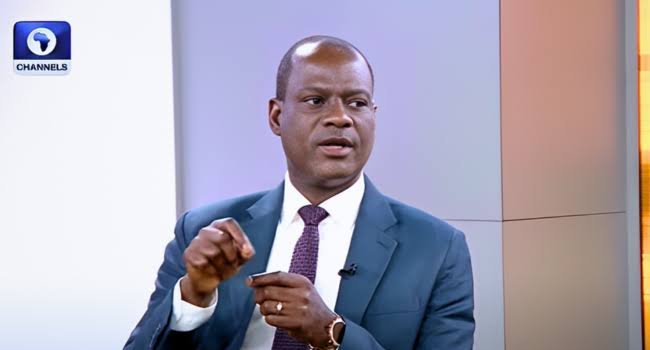
The Minister of Finance and Coordinating Minister of the Economy, Taiwo Oyedele, has reaffirmed that the Presidency has no plans to reintroduce the fuel subsidy, despite public pressure caused by the rising cost of living.
Speaking on Tuesday in Paris, France, during a meeting with global investors alongside President Bola Tinubu, Oyedele explained that subsidies create economic “distortions.”
He emphasized that the government would not implement price controls because “we believe in the market” to regulate itself.
Since the subsidy was removed in May 2023, Nigeria has faced severe economic pressure. Headline inflation jumped from 22.41% in May 2023 to a 19-year high of 34.19% by June 2024.
This surge, fueled by the rising costs of petrol, food, and transport, saw food inflation climb past 39% by October 2024.
Combined with currency devaluation, transportation costs have skyrocketed by nearly 300%, deepening poverty across the nation.
Despite these challenges, the Minister highlighted new global prospects, stating, “the situation in Iran presents new opportunities for us as the world looks to diversify sources of energy and invest in new markets.”
President Tinubu told investors that removing the “burden” of the subsidy has led to better foreign exchange stability. “Subsidy that was a burden to the entire country, was removed and ever since we have achieved FX stability,” he noted.
His Adviser on Information and Strategy, Bayo Onanuga, added that these bold reforms are designed to stabilize macroeconomic indicators and build a foundation for “sustained inclusive growth.”
Further highlighting economic progress, Oyedele noted that Nigeria achieved 11.2% GDP growth in dollar terms in 2025.
He remarked that this record supports the nation’s goal of becoming a $1 trillion economy by 2030.
To ensure transparency, the Minister also pledged to begin publishing quarterly financial data.
Supporting this fiscal outlook, the Director General of the Debt Management Office, Patience Oniha, assured the group—which included representatives from Citibank, Amundi, BlueCrest, and Ninety One—that the government is committed to “sustainable debt management.”
President Tinubu concluded by stating that his focus is on policy stability and ensuring that these strategic changes result in “concrete benefits for all Nigerians.”
When asked about his plans beyond 2027, the President promised to maintain fiscal discipline and deliver consistent policy execution.







No Comments